

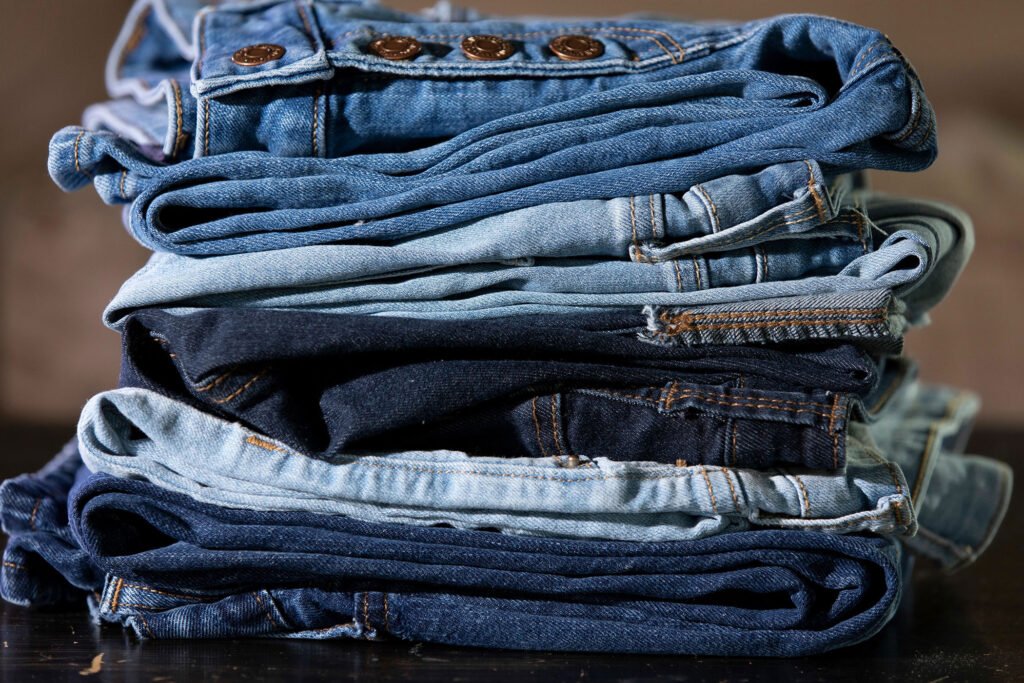

The iconic blue color of jeans has roots in indigo dye, 19th-century workwear and the practical benefits of dark-colored denim.
Jeans are one of the most recognizable pieces of clothing in the world, and while they are now available in black, gray, white and countless other shades, blue remains their signature color.
The reason goes beyond fashion or the fact that blue is easy to pair with different shirts. The color is closely linked to the history of denim and the unique properties of indigo dye.
Why are jeans blue?
Traditional denim is dyed using indigo, a distinctive blue dye that behaves differently from many conventional textile dyes. Rather than penetrating deeply into the fibers, indigo primarily forms a layer around the surface of the yarn.
This characteristic helps create one of denim’s most recognizable features. With repeated wearing, washing and friction, parts of the fabric gradually become lighter. The resulting variations in color give jeans their familiar worn-in appearance.
Over time, this natural fading became part of the appeal of denim rather than simply a sign of wear.
Where did blue jeans originate?
The popularity of blue jeans is closely associated with the 19th century. In 1873, Levi Strauss and Jacob Davis patented a design for reinforced denim trousers. At the time, such clothing was primarily associated with workers because denim was considered a strong and durable fabric suitable for demanding physical labor.
The dark blue color also offered a practical advantage. Dirt, stains and marks from everyday work were generally less noticeable on darker fabric.
This was particularly useful at a time when workers did not change their clothing as frequently as people commonly do today. A darker color could therefore remain presentable for longer between washes.
How jeans became a fashion icon
Repeated use and washing gradually softened denim, while friction caused certain areas to fade more than others. This created distinctive patterns that gave individual pairs of jeans a worn and naturally aged appearance.
Those characteristics eventually became part of denim’s identity. What began largely as practical workwear gradually moved into mainstream fashion and became a global clothing staple.
Interestingly, denim’s natural appearance is not the deep blue traditionally associated with jeans. That familiar shade comes from the use of indigo dye.
Today, consumers can easily find jeans in a wide range of colors, including black, gray and white. However, blue remains the classic choice because of the combination of denim’s history, the distinctive behavior of indigo dye and the practical needs that shaped early workwear.
About The Author