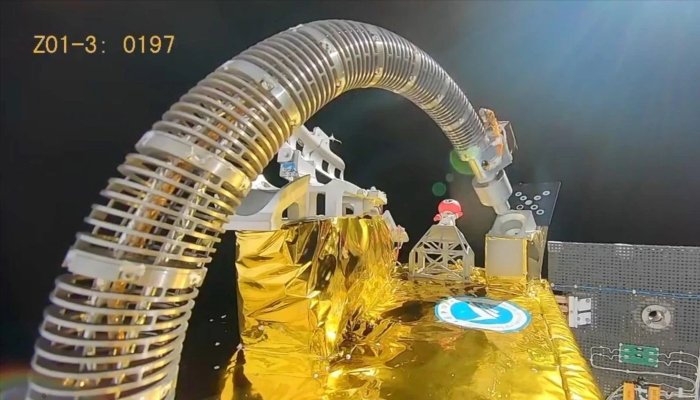

A Chinese commercial satellite has successfully completed a refueling test in low Earth orbit marking a significant advancement in space technology. The satellite, named Yuxing 306 used a flexible robotic arm resembling an octopus to perform the complex operation.
According to Chinese media reports Yuxing 306 was launched last week from Gansu province and carried out the test while orbiting at an altitude of approximately 530 to 540 kilometers above Earth. The robotic arm is designed to bend, twist, and wrap around objects in tight and complex spaces. Its tip can connect precisely to a designated refueling port, enabling delicate operations in space.
Developed by experts at Tsinghua Shenzhen International Graduate School, the arm consists of multiple spring-like tubes equipped with motors that help extend and attach to target points. Although it remains unclear whether the satellite docked with another spacecraft during the test, such docking is essential for actual refueling missions.
Experts described the process as extremely challenging, comparing it to threading a needle in space due to high speeds and precision requirements. This emerging technology aims to extend the lifespan of satellites and reduce space infrastructure costs, signaling a major step forward in orbital servicing capabilities.
About The Author