
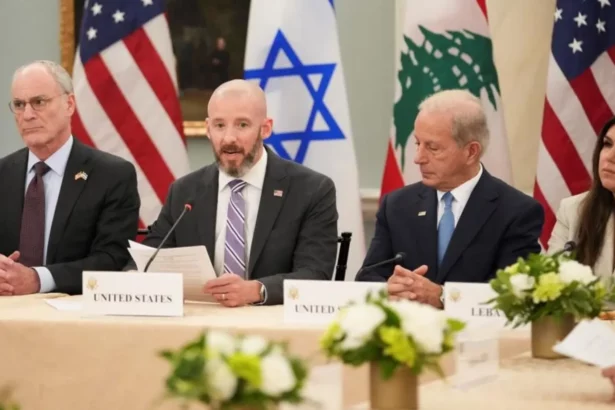

A new ceasefire agreement between Israel and Lebanon has raised hopes of reducing tensions along one of the Middle East’s most volatile frontiers. However, the success of the arrangement appears heavily dependent on whether the Iran-backed militant group Hezbollah agrees to halt its military operations, a question that remains unanswered.
According to the United States State Department, Israel and Lebanon have reached an understanding aimed at restoring calm following a fresh wave of violence that left multiple casualties on both sides of the border. The announcement comes after Israeli airstrikes reportedly killed at least nine people in southern Lebanon, while Hezbollah responded with rocket attacks targeting northern Israel.
Under the proposed framework, all parties reaffirmed support for Lebanon’s sovereignty, emphasizing that the country’s future should be shaped solely by its elected government. The agreement rejects interference by both state and non-state actors and seeks to strengthen the authority of Lebanese institutions in regions affected by armed conflict.
A key provision of the deal calls for the withdrawal of Hezbollah operatives from southern Lebanon, particularly from areas stretching between the Litani River and the Israeli border. The move is intended to reduce the risk of direct confrontation and create conditions for long-term stability.
The United States has pledged support for establishing pilot security zones where the Lebanese Armed Forces would assume full responsibility for maintaining order. These areas would be free of all non-state armed groups, marking a significant step toward consolidating state control in sensitive border regions.
The latest initiative follows an earlier ceasefire effort that temporarily reduced hostilities but eventually collapsed amid continued cross-border attacks. Diplomats hope the new framework will prove more durable, although analysts caution that its effectiveness will depend on compliance by all parties involved.
Further negotiations are scheduled for June 22, with officials seeking to transform the current arrangement into a broader and more comprehensive settlement. The talks are expected to address security mechanisms, border stability, and measures designed to prevent future escalations.
Israeli leaders have warned that military operations could intensify if Hezbollah continues launching attacks, while Lebanese authorities have accused Israel of targeting civilians and medical personnel in southern parts of the country. These competing narratives underscore the deep mistrust that continues to hinder diplomatic progress.
With Hezbollah yet to issue an official response and sporadic exchanges of fire still being reported, the situation remains highly fragile. Regional observers warn that the coming days could determine whether the ceasefire becomes a stepping stone toward stability or another short-lived pause in a long-running conflict.
About The Author