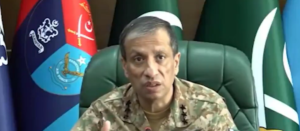

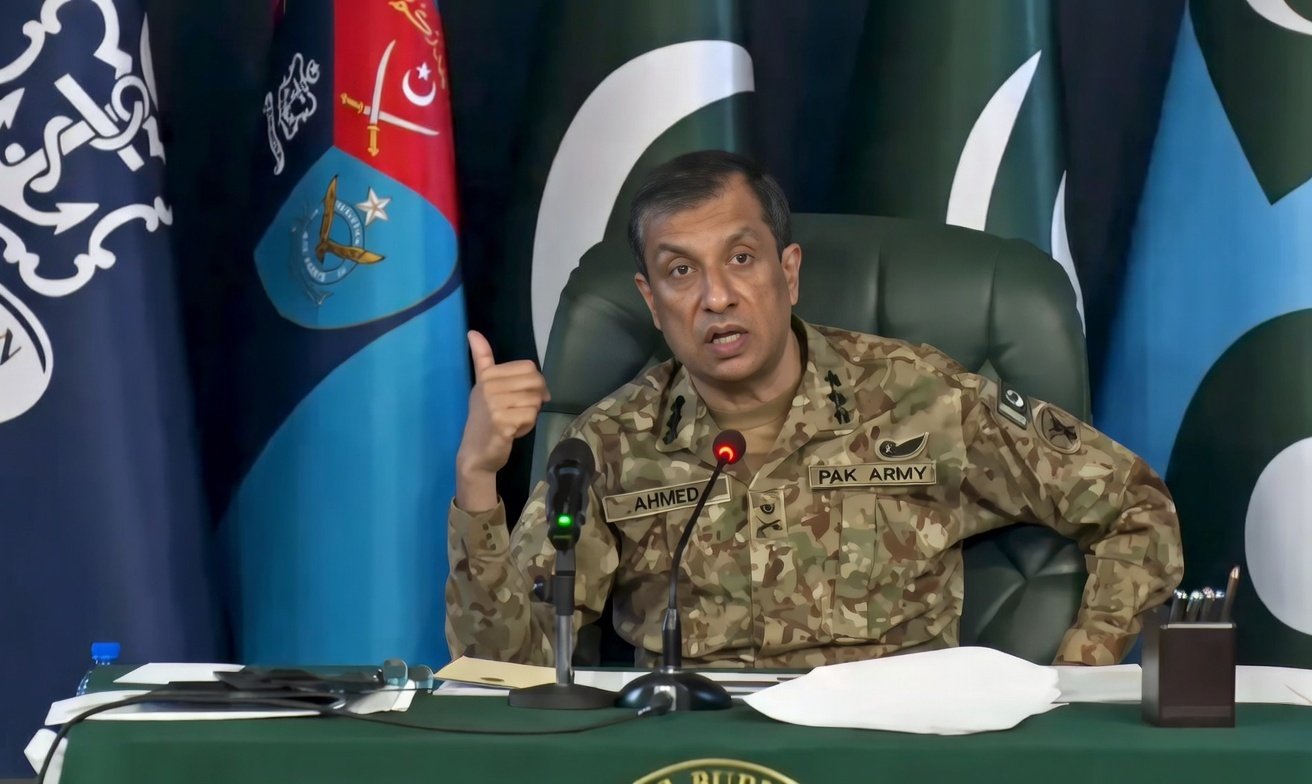

DG ISPR Lt Gen Ahmed Sharif Chaudhry accuses India of staging false flag operations and claims decisive victory in a multi-domain conflict dubbed “Marka-i-Haq,” intensifying already fragile regional tensions.
RAWALPINDI — A sharp escalation in rhetoric between nuclear-armed neighbors unfolded on Thursday as Pakistan’s military spokesperson made sweeping claims about past conflict dynamics, accusing India of orchestrating fabricated incidents and failing to substantiate long-standing allegations against Islamabad.
Addressing a joint press conference in Rawalpindi alongside Rear Admiral Shifaat Ali Khan and Air Vice Marshal Tariq Ghazi, Inter-Services Public Relations (ISPR) Director General Lt Gen Ahmed Sharif Chaudhry asserted that Pakistan had prevailed in what he described as a multi-domain confrontation termed “Marka-i-Haq (Battle of Truth).”
He claimed Pakistan’s armed forces had successfully countered an adversary “five times larger,” framing the confrontation as a decisive moment in shifting regional military and information warfare dynamics. According to him, the conflict extended beyond traditional battlefields into cyberspace and the information domain.
The ISPR chief alleged that India fabricated the so-called “Pahalgam incident,” describing it as a false flag operation and questioning New Delhi’s rapid attribution of blame without investigation. He claimed that an FIR was registered within minutes of the incident and said no evidence had been presented even after a year.
Chaudhry further challenged India to identify any alleged militant infrastructure it claims to have targeted, arguing that such assertions remain unverified. He accused Indian authorities of using the incident to reinforce what he called a long-standing narrative linking Pakistan to cross-border militancy.
Calling Pakistan “a force for regional peace,” he said the country continues to support stability despite persistent tensions. He also accused segments of Indian political leadership of promoting aggressive nationalist rhetoric and ideological narratives linked to Hindutva politics.
He alleged that internal political influence has affected India’s military professionalism and extended criticism over reported rights issues in Kashmir and other Indian regions, including Manipur. He reiterated Pakistan’s position that the Kashmir dispute remains unresolved under United Nations resolutions and cannot be treated as an internal matter of India.
Throughout the briefing, Chaudhry claimed Pakistan had “buried India’s arrogance” during the conflict period and asserted that Islamabad had demonstrated effective response capabilities across multiple operational domains. He emphasized that Pakistan remains fully prepared for any future escalation.
“We were ready then, and we are ready today,” he said, warning against any potential aggression and describing war between nuclear-armed states as “madness.”
He also accused India of continuing to rely on proxy groups following what he described as its strategic setbacks, while criticizing sections of Indian media for sensationalism and misinformation.
Despite the heated accusations, he maintained that Pakistan’s institutions and leadership remain aligned on national security priorities, stating that the country is “on the same page” in matters of defence and foreign policy.
Relations between Pakistan and India remain tense, shaped by decades of mistrust, unresolved disputes, and recurring diplomatic standoffs, with Kashmir continuing to be the central flashpoint.
About The Author