
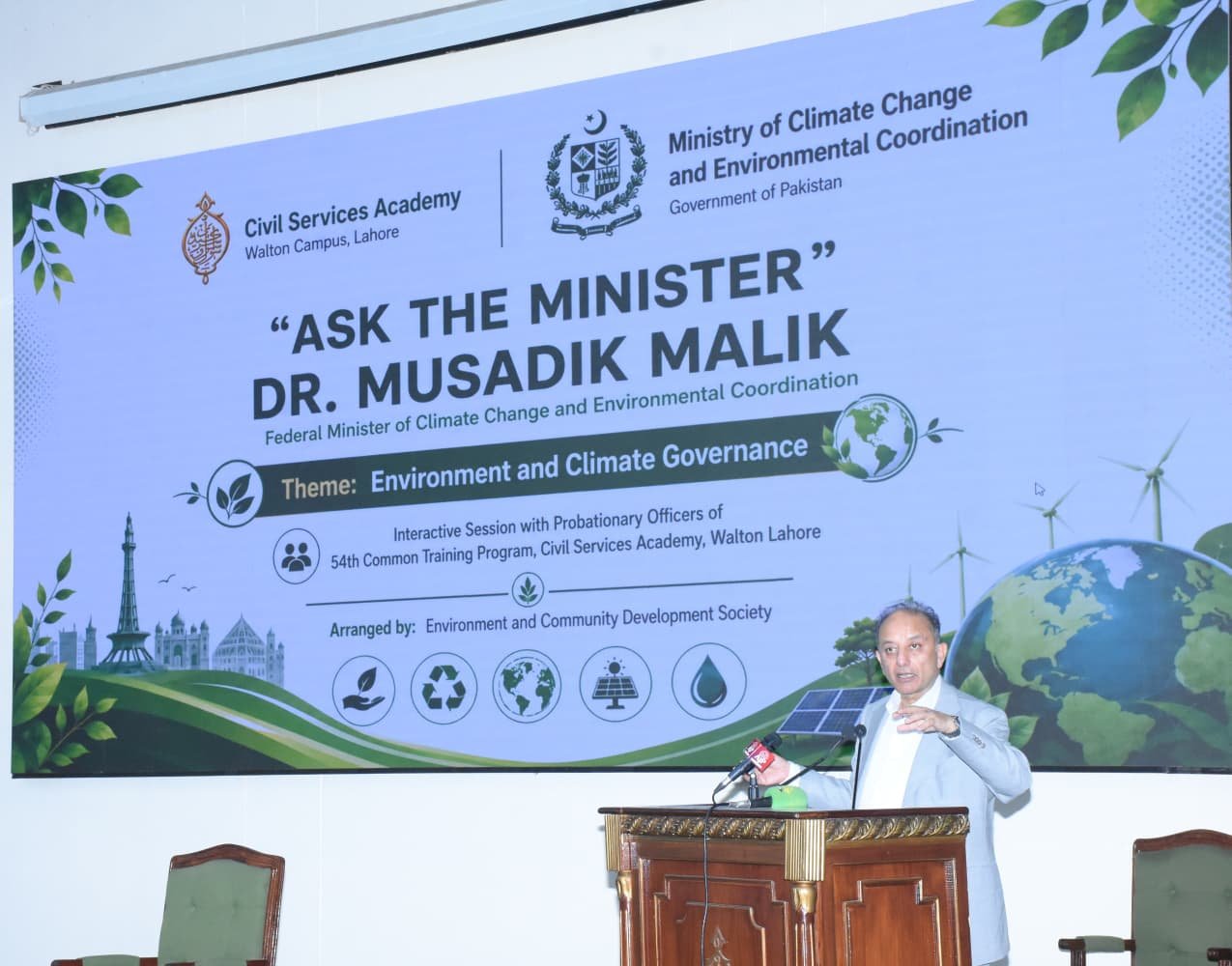

Federal Minister Dr. Musadik Malik urged future civil servants to prioritize climate governance, sustainable development and environmental justice, warning that climate change is now one of Pakistan’s greatest national security and economic challenges.
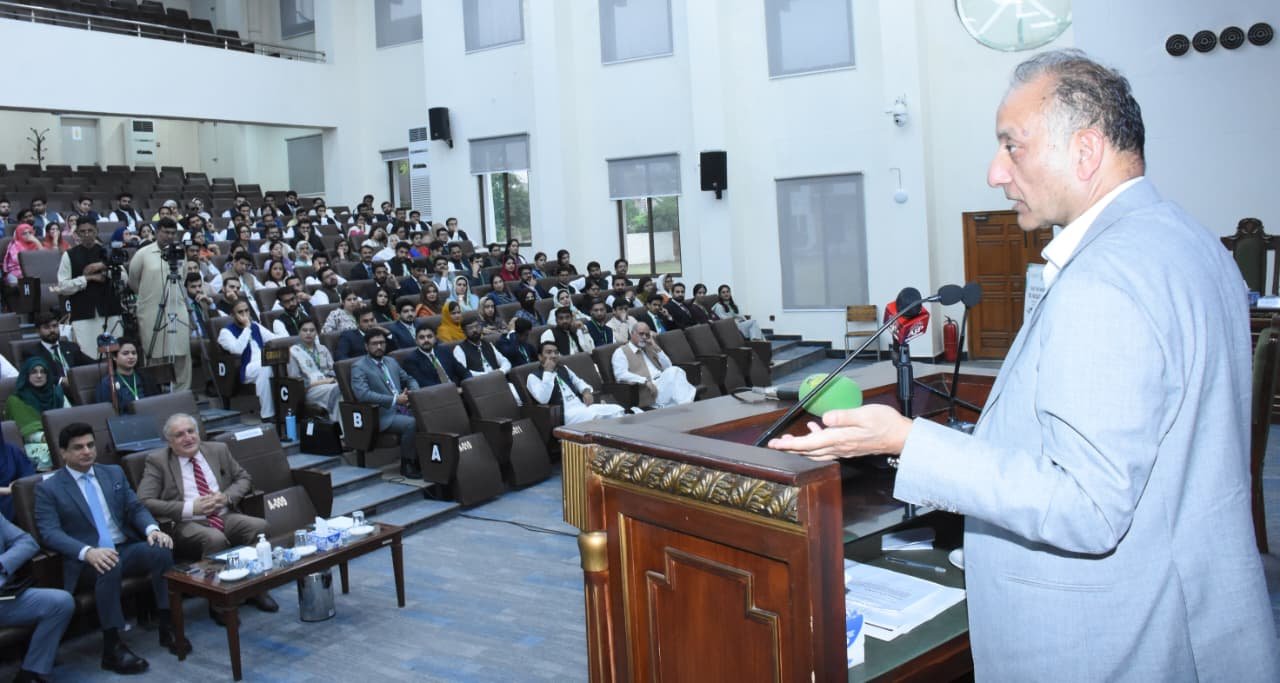
Climate change has become one of the most serious global challenges, and Pakistan must strengthen environmental governance, sustainable development and institutional coordination to reduce its growing risks, Federal Minister for Climate Change and Environmental Coordination Dr. Musadik Malik said during an address at the Civil Services Academy’s Walton Campus in Lahore.
Speaking to probationary officers of the 54th Common Training Program on “Environment and Climate Governance,” the minister said Pakistan contributes only a small share of global carbon emissions but remains among the countries most vulnerable to climate-related disasters. He stressed that climate justice, international financial support and fair technology transfer are essential for developing nations to effectively tackle the crisis.
Dr. Malik noted that while families spend decades escaping poverty, a single flood, heatwave or climate disaster can erase a lifetime of progress within days. He cited recent major floods that resulted in thousands of deaths and injuries while displacing nearly 40 million people, emphasizing the need for stronger national climate resilience.
He urged policymakers to view climate change not only as an environmental issue but also as a challenge affecting economic stability, human development and social justice. Calling affordable and safe housing a basic right, he said climate-resilient urban planning must prioritize low-income communities and ensure equal access to clean air, safe drinking water and healthy living conditions.
Highlighting the importance of innovation, the minister encouraged young civil servants to integrate climate considerations into policymaking and embrace emerging technologies to drive economic growth. He also described the government’s “Uraan Pakistan” initiative as a long-term vision to strengthen exports, investment, technology and human capital.
Responding to questions, Dr. Malik reaffirmed Pakistan’s commitment to international climate diplomacy, addressed concerns over solar energy policy and said the Indus Waters Treaty cannot be violated unilaterally, warning that any disruption to regional water flows could have serious consequences.
About The Author