
UN condemns the deadly Swat suicide bombing while Pakistan urges stronger international action against militant groups it says operate from Afghan territory.
UNITED NATIONS: The United Nations Security Council has condemned the deadly suicide bombing in Swat, while Pakistan has renewed its warning that militant groups continue to operate from alleged safe havens inside Afghanistan.
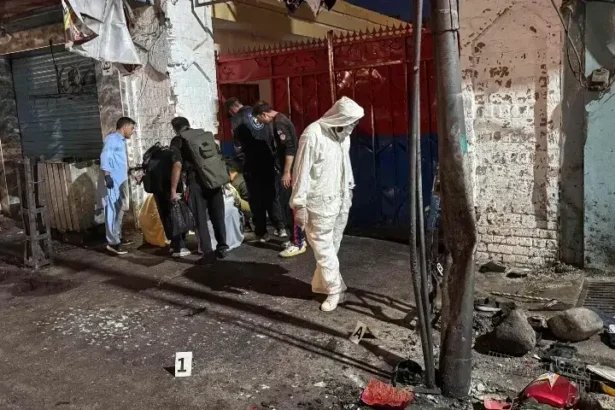
The bombing took place outside a police station in Kabal, Swat, on Aug. 2, killing at least 16 Pakistani nationals, mostly civilians, and injuring dozens of others. The Tehreek-i-Taliban Pakistan, or TTP, claimed responsibility for the attack.
In a statement issued through the office of the U.N. secretary-general’s spokesperson, Security Council members described the bombing as “heinous and cowardly.” They expressed condolences to the families of the victims and wished those injured a speedy recovery.
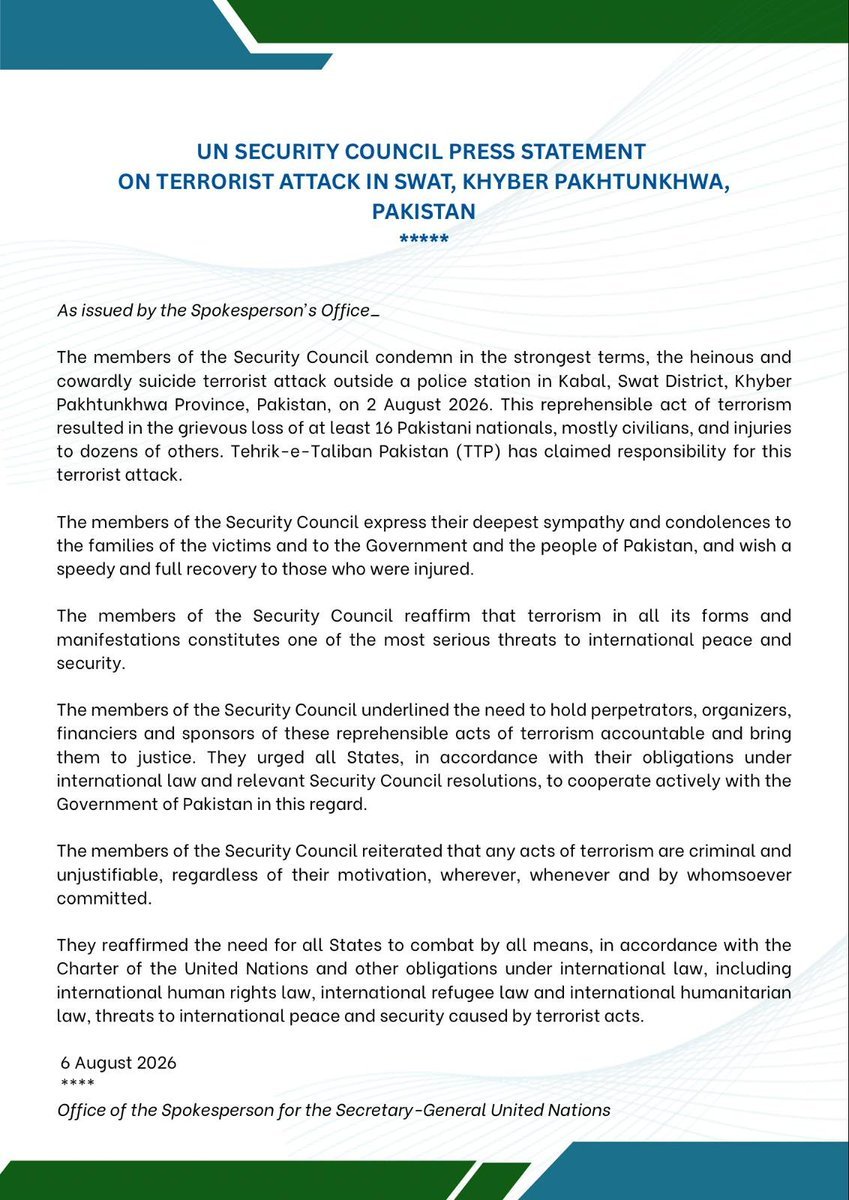
The council also stressed that those responsible must be held accountable, calling for perpetrators, organizers, financiers and sponsors of terrorism to be brought to justice.
The Security Council reiterated that terrorism, regardless of its motivation, location or perpetrators, remains a serious threat to international peace and security. It also called on member states to cooperate with Pakistan in line with international law and relevant U.N. resolutions.
Pakistan Raises Concerns Over Afghan-Based Militants
The condemnation came as Pakistan highlighted its broader security concerns during a U.N. Security Council briefing.
Pakistan’s Permanent Representative to the U.N., Ambassador Asim Iftikhar, said several militant organizations were maintaining what Islamabad described as safe havens in Afghanistan and posed an increasing threat to Pakistan and the wider region.
He identified the banned TTP, Balochistan Liberation Army and its Majeed Brigade, Islamic State Khorasan, East Turkistan Islamic Movement and Al Qaeda affiliates among the groups of concern.
Pakistan urged the international community to ensure that Afghan territory is not used to launch terrorist attacks against neighboring countries. Islamabad also called for stronger international cooperation to combat cross-border terrorism.
The developments add further strain to the already sensitive security relationship between Pakistan and Afghanistan. Islamabad has repeatedly raised concerns over militant activity along its western border, while Afghanistan has rejected allegations that it allows its territory to be used against other countries.
The latest U.N. condemnation comes after the fourth U.S.-Pakistan Counterterrorism Dialogue in Washington, where officials from both countries reaffirmed their commitment to combating terrorist organizations.
About The Author