

Iran and the United States are intensifying economic pressure over the Strait of Hormuz, with sanctions, oil prices and global energy security at the center of the standoff.
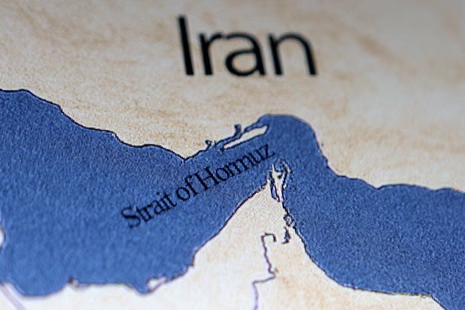
KARACHI: The confrontation between Iran and the United States is entering a critical economic phase as Washington and Tehran seek to use financial pressure and control of the strategically vital Strait of Hormuz to strengthen their negotiating positions.
The Wall Street Journal reported that the conflict has increasingly developed into an economic contest, with both sides attempting to make the financial consequences of the standoff severe enough to force the other to reconsider its position.
The Trump administration is preparing tougher economic measures against Iran. Reuters reported Sunday that US officials are considering additional steps targeting Iran’s oil trade, financial networks and entities involved in sanctions evasion. Possible measures include tighter action against oil shippers and Chinese entities involved in processing or facilitating Iranian crude exports.
Washington is also focused on containing the impact of the crisis on global energy markets. The continued disruption around the Strait of Hormuz has contributed to higher oil prices, increasing pressure on consumers and businesses worldwide. Reuters reported that Brent crude recently approached $90 a barrel amid renewed uncertainty over shipping through the waterway.
Iran, meanwhile, is seeking to use its position around the Strait of Hormuz as leverage. Tehran has indicated that reopening the crucial shipping route would require major concessions from Washington, while negotiations remain stalled. Oil prices have responded to the uncertainty, highlighting the wider economic consequences of the dispute.
The Strait of Hormuz is particularly important because it is a major route for international energy shipments. Any prolonged disruption can affect crude supplies, transportation costs, inflation and energy prices far beyond the Middle East.
The central question is now whether Washington’s intensified sanctions and financial pressure can force Tehran to change course, or whether sustained disruption to the waterway and higher energy prices will eventually increase political and economic pressure on the United States.
About The Author