

Column title: Qalam Kahani
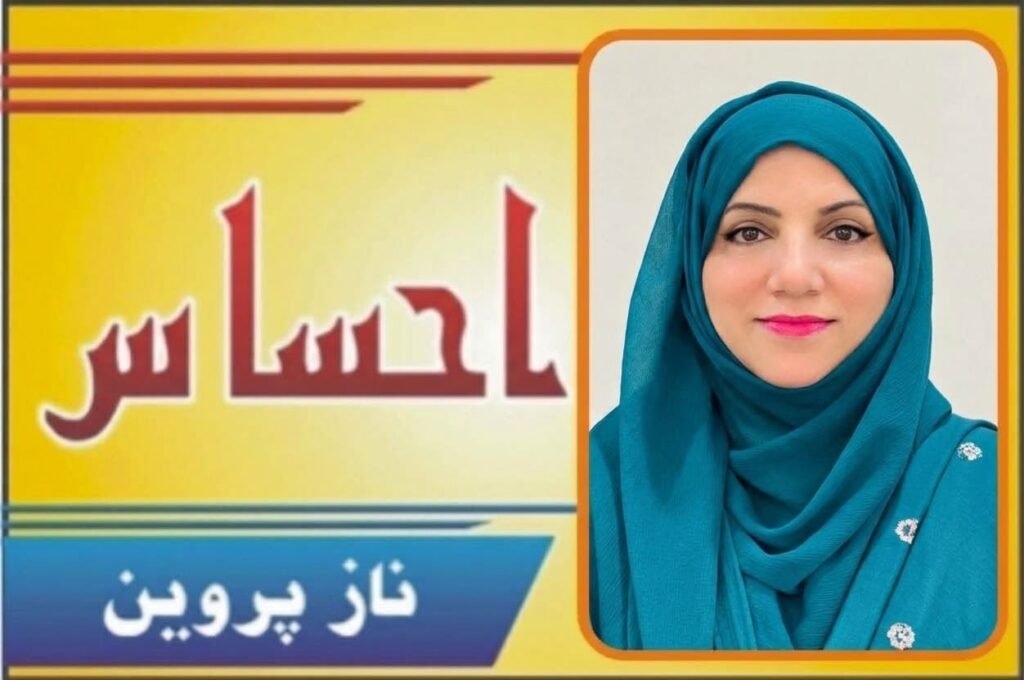
Written by: Syed Sadaqat Ali Shah
It was said already here at this platform that this voice came from Mecca and Medina and now as the continuity of the proceedings US President Donald Trump has said it: “The Mecca Agreement shows that the Middle East is uniting, and also shows how well these countries can defend themselves in the best possible way. This is a big, bold, and important first step. I congratulate the great leadership of all three countries.”Now the time has come for all of us to say: Alhamdulillah, MashaAllah, SubhanAllah, Marhaba”.
Who knew that all this would happen after February 28, 2026? Pakistan made it happen. On February 28, 2026, when the United States and Israel began their aggression against Iran, all eyes turned to Pakistan. The whole world was saying it would have to be seen whether Pakistan would side with its neighboring country Iran or with the United States. It was a tightrope Pakistan had to walk. Pakistan could neither abandon its neighboring brotherly Muslim country Iran, nor could it afford to anger the United States. This war drew many countries into its grip. Saudi Arabia, the United Arab Emirates, Kuwait, Bahrain, Jordan, Qatar — in short, no country in the Gulf states remained untouched by this war. Despite all this, Pakistan kept its composure. Through “quiet diplomacy,” it kept everyone on board. At one point, the question of protecting the two Holy Mosques (Haramain Sharifain) also arose. Pakistan resolved this matter too through diplomacy.
On April 12, 2026, the world witnessed another scene. An Iranian aircraft landed in Islamabad carrying Speaker Baqer Qalibaf, Foreign Minister Abbas Araghchi, and the Iranian delegation. After that, an American aircraft brought Vice President J.D. Vance, Steve Witkoff, and Jared Kushner to Islamabad as well. Pakistan proved the strength of its diplomacy. Under the name “Islamabad Talks,” it brought the two rival nations face-to-face after decades. Twenty-one hours of lengthy negotiations took place in Islamabad. No agreement was reached on this occasion, but US Vice President J.D. Vance was compelled to say: “The good news is that meaningful talks took place with the Iranians. We are returning to America without an agreement.” He said that during the negotiations he spoke with President Donald Trump numerous times — “I don’t know how many times we spoke during those 21 hours, maybe half a dozen, maybe a dozen times. We were also in contact with Admiral Cooper, Marco, and the entire National Security team. We thank Prime Minister Shehbaz Sharif and Field Marshal and Army Chief General Syed Asim Munir — both hosted us excellently, and whatever fell short in the negotiations, it was not because of the Pakistanis.”
Iran’s Parliament Speaker Mohammad Baqer Qalibaf and Foreign Minister Abbas Araghchi accused the United States of “failing to gain Iran’s trust, even though their team had presented forward-looking proposals. America has now understood Iran’s position and principles; it is now up to them whether they can earn our trust or not.” Qalibaf said that in defending the rights of the Iranian nation, they believe in both diplomacy and military struggle side by side. “We will not retreat, even for a moment, from the gains achieved in defending the Iranian nation during the 40-day war.” He thanked Pakistan for playing an important role in facilitating the negotiation process.
Thank you, Pakistan. Pakistan, thank you. This was the stage at which everyone was saying that America and Iran would never, under any circumstances, reach any consensus. This region was caught in the grip of war, and for this region to emerge from war seemed impossible. Only one country, Pakistan, stood firm — not only standing firm but ready to do whatever it took for peace in the region. Pakistan did not lose heart. It turned the impossible into the possible. And then, on June 18, 2026, Pakistan’s diplomacy triumphed. US President Donald Trump and Iranian President Masoud Pezeshkian signed the Islamabad Memorandum of Understanding. Pakistan’s Prime Minister Shehbaz Sharif signed as mediator. At the time, US President Donald Trump was on a visit to France. Signing in the presence of the French president, Trump once again thanked Pakistan and praised the leadership of Prime Minister Shehbaz Sharif as well as Field Marshal Syed Asim Munir. On the other side, Iranian President Masoud Pezeshkian, after signing, shared a photo of the memorandum with the United States, calling it a historic document. After signing the memorandum, Pezeshkian telephoned Prime Minister Shehbaz Sharif. The two leaders spoke for 30 minutes.
It should be noted that between America and Iran, the “Islamabad Memorandum of Understanding” remains, to this day, the one document that still stands. Pakistan’s diplomatic role in the cause of peace is not only being praised — the Mecca Joint Defense Agreement is now also receiving recognition at the global level. Prime Minister Shehbaz Sharif praised President Trump’s words and said: “Pakistan, together with Saudi Arabia and Türkiye, will continue to play its role in ensuring the defense of itself and the region. I pay tribute to President Trump for helping avert nuclear catastrophe in South Asia and for helping save the lives of millions. Lasting peace is the essential and fundamental condition for a bright and prosperous future for the people.”
The PM is absolutely right. “Sustainable peace” is the essential condition. Peace that doesn’t last is no peace at all. If peace comes but does not last, such peace serves no purpose. America and Iran must now come back — they must return to the path of “lasting peace.” They must learn from Pakistan, Saudi Arabia, and Türkiye. The “Islamabad Memorandum of Understanding” is the only way forward. The Mecca Joint Defense Agreement is its modern form. “Now the time has come for all of us to say: Alhamdulillah, MashaAllah, SubhanAllah, Marhaba”.
Disclaimer: The views, opinions, and analyses expressed in this article are solely those of the author and do not necessarily reflect or represent the views, policies, or position of the organization, its management, or its editorial policy.
About The Author