
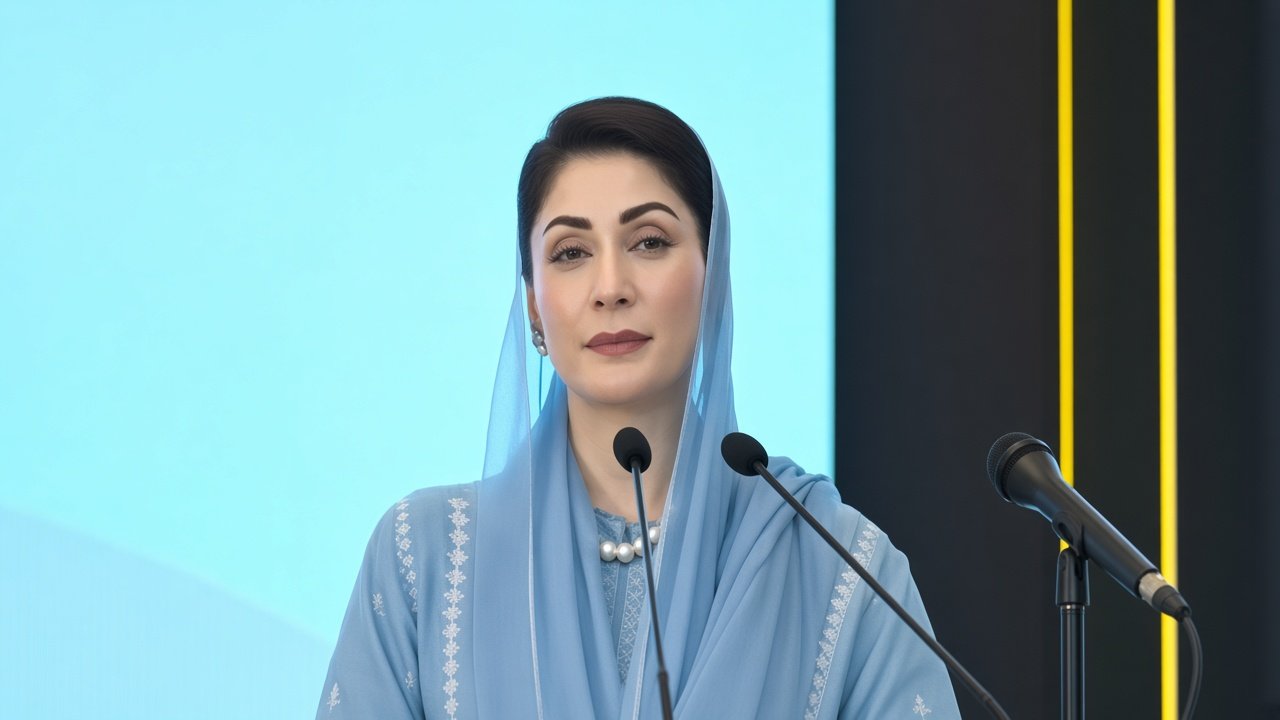

Maryam Nawaz says Punjab’s new Jinnah Institute of Cardiology will offer advanced cardiac treatment, including free heart transplants, while expanding specialized care across the province.
Maryam Nawaz Announces Free Heart Transplants at New Jinnah Institute of Cardiology
LAHORE: Punjab Chief Minister Maryam Nawaz Sharif has announced that Pakistan’s first dedicated heart transplant center at the newly inaugurated Jinnah Institute of Cardiology in Lahore will provide heart transplants completely free of cost to eligible patients.
Addressing the institute’s inauguration ceremony, Maryam Nawaz described the opening as an emotional milestone, saying the project had been a long-standing priority because the existing Punjab Institute of Cardiology was facing an overwhelming patient burden from Lahore, across Punjab and from other parts of Pakistan.
She said the new hospital, built at a cost of around Rs16 billion, is now functional and has already performed its first angiography. The facility includes six state-of-the-art catheterization laboratories, five modern operating theaters, advanced imaging and electrophysiology facilities, and specialized equipment designed to support complex cardiac procedures.
The chief minister said one of the cath labs is a hybrid facility that can allow interventional procedures and surgery to be carried out within the same clinical setting when required. She also highlighted artificial intelligence-assisted angiography, a 3 Tesla MRI system and advanced CT imaging among the hospital’s modern technologies.
Maryam said a dedicated fund had been allocated for heart transplants and urged eligible patients requiring the procedure to contact the institute. She said the government was also exploring lower-cost technologies for artificial hearts and other advanced cardiac treatment options.
The chief minister stressed that healthcare facilities must operate on the principles of service, discipline and accountability. She directed hospital administrators to ensure patients do not face unnecessary delays, unofficial payments, medicine shortages, poor cleanliness or irregularities in surgery scheduling.
She particularly praised Dr. Hasnat, whom she said had returned from England to serve in Pakistan, and acknowledged health officials, doctors, nurses and other members of the project team.
Maryam also outlined several broader healthcare initiatives, including the expansion of cardiac care through cath labs in districts such as Mianwali, Jhelum, Jhang, Bahawalnagar, Kasur and Vehari. She said the province was working toward establishing 20 operational cath labs so patients would not have to travel to Lahore or Rawalpindi for cardiac procedures.
She said Punjab’s child heart surgery program had also made significant progress, with more than 14,600 operations carried out and the previous long waiting list substantially addressed. The chief minister further cited thousands of organ transplants, including liver, kidney, corneal and bone marrow procedures.
On kidney care, Maryam said eligible dialysis patients were receiving support of about Rs1.1 million through the dialysis card, including dialysis sessions and erythropoietin injections. She also said the government was examining home dialysis technology to reduce the burden on patients who must spend long hours at hospitals.
The chief minister highlighted Punjab’s free stroke treatment program, district-level cath labs, air ambulance service, clinics on wheels and field hospitals. She said essential medicines for diseases including hepatitis, heart disease, cancer and tuberculosis were being delivered to patients’ homes in many cases.
She also announced progress toward a large cancer hospital named after former Prime Minister Nawaz Sharif, describing it as a major specialized facility intended to provide free cancer treatment.
Maryam concluded by urging officials to accelerate work on the proposed Nawaz Sharif Medical District, which is intended to house specialized hospitals for diseases requiring treatment that is currently unavailable in Pakistan.
She said the ultimate measure of government performance was whether essential services reached people at their doorsteps and whether patients could receive treatment without unnecessary hardship.
About The Author