
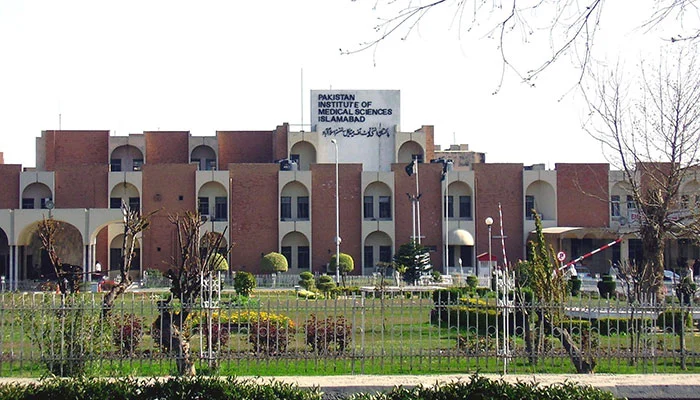

Dr. Muhammad Salman has been appointed executive director of PIMS on deputation, while several key medical, administrative and security posts have been assigned additional charges.
ISLAMABAD: The Pakistan Institute of Medical Sciences (PIMS) has undergone a major administrative reshuffle, with Dr. Muhammad Salman appointed as the hospital’s new executive director and several officers given additional charges for key medical, administrative and security positions.
According to a notification issued by the Ministry of Health, Dr. Muhammad Salman has been posted as executive director PIMS in Grade 21 on deputation for three years, with immediate effect. He will continue serving as chief executive officer of the National Institute of Health (NIH) until an alternative arrangement is made there.
The notification also announced changes in several important departments at PIMS.
Professor of Pediatrics Dr. Nuzhat Yasmeen, a Grade 20 officer, has been given the additional charge of joint executive director of the Children’s Hospital for three months. Assistant Professor of Pediatrics Dr. Rehmana Waris has also been assigned the additional charge of associate professor of pediatrics at the Children’s Hospital for three months.
At the Mother and Child Health (MCH) Center, Associate Professor of Gynecology Dr. Shamaila has been given the additional charge of professor and head of the gynecology department in Grade 20 for three months or until further orders. Medical Officer Dr. Amina from pediatrics has been assigned the additional charge of senior registrar in the gynecology department.
Administrative and security responsibilities have also been redistributed. ENT Professor Dr. Altaf Hussain, a Grade 20 officer, has been given the additional charge of joint executive director (non-medical) for three months or until a permanent officer is appointed.
Meanwhile, Hassan Ashraf, an assistant registrar at Shaheed Zulfiqar Ali Bhutto Medical University in Grade 17, has been assigned the additional charge of assistant director security at PIMS alongside his existing duties.
PIMS is one of the largest public-sector hospitals in the federal capital and provides healthcare to patients from Islamabad as well as Punjab, Khyber Pakhtunkhwa, Gilgit-Baltistan and Azad Kashmir.
The latest appointments are intended to fill vacant responsibilities and maintain the hospital’s administrative and medical operations. However, the reliance on short-term additional charges also highlights concerns over the availability of permanent leadership for critical positions.
The simultaneous assignment of the PIMS executive director role to an officer who continues to oversee NIH may also raise questions about the capacity to manage two major federal health institutions effectively.
About The Author