

Nepal’s devastating Aug. 26 flash floods have killed more than 700 people, while thousands remain missing as rescuers battle rain, difficult terrain and damaged infrastructure.
Nepal’s devastating flash floods have killed more than 700 people and left thousands missing, as rescue teams continue searching for survivors across flood-hit areas while poor weather and difficult terrain hamper operations.
The disaster struck on Aug. 26 after a massive flow of water, mud, rocks and debris surged through parts of Nepal and across the Nepal-China border. Nepal’s government said 626 bodies had been recovered by Saturday, with about 2,400 people still unaccounted for. Updated reports on Sunday put Nepal’s death toll at 734, with 2,498 people missing. China has reported 16 deaths and 546 missing in Tibet.
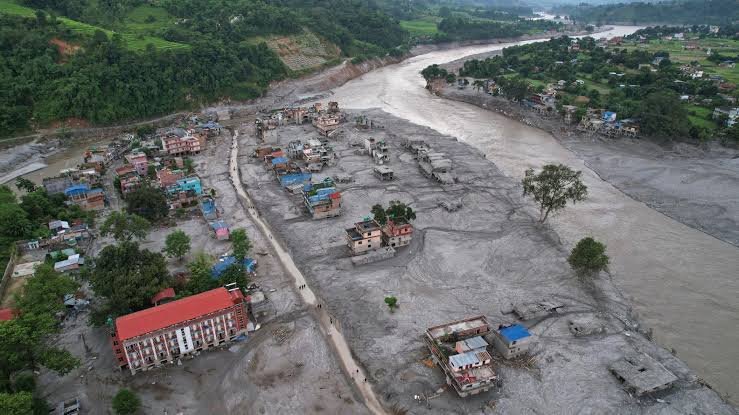
The flooding severely damaged settlements, roads, bridges, hydropower facilities and other infrastructure. Some bodies were reportedly carried by floodwaters far downstream, complicating recovery and identification efforts.
Authorities believe the disaster was linked to an ice and rock collapse in the Himalayan region, although Nepal’s Foreign Ministry said the precise cause had not yet been fully determined. The collapse generated a powerful surge of water and debris that moved rapidly through river systems and affected communities along the route.
The Nepal Tourism Board said 261 foreign tourists had been rescued from flood-affected areas by Saturday evening, while 320 tourists remained out of contact. The rescued group included travelers from 16 countries, many of whom had been visiting Gosainkunda and traveling toward Kailash Mansarovar.
Search-and-rescue teams are also working to reach people believed to be trapped in damaged hydropower facilities and tunnels. More than 3,700 people have been rescued from affected areas, while authorities continue efforts to locate those still missing.
Poor weather has repeatedly disrupted helicopter operations, while unstable terrain, damaged roads and rising water levels are making access to some areas difficult. Authorities have also remained alert to the possibility of further flooding from water accumulating behind debris and landslides.
The disaster has raised renewed concerns about the vulnerability of Himalayan communities to glacier-related hazards. Scientists have warned that rising temperatures are contributing to changes in glaciers and increasing risks associated with unstable ice, rock and glacial lakes. However, the exact chain of events behind the Aug. 26 disaster remains subject to investigation.
About The Author