

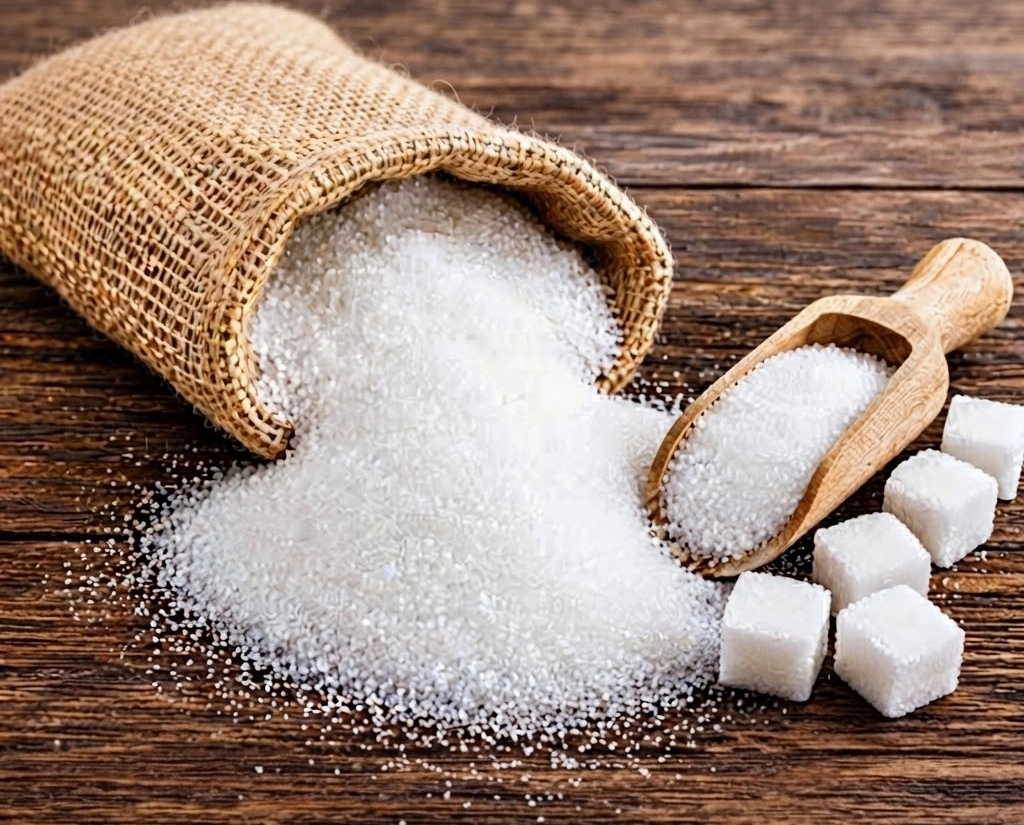

Pakistan plans to export 200,000 tonnes of surplus sugar as the government says domestic stocks are sufficient to meet demand until the next crushing season.
ISLAMABAD: The government has decided to allow the export of an additional 200,000 metric tonnes of sugar, despite concerns that increased exports could put upward pressure on domestic prices.
The decision was taken by a sugar steering committee chaired by Deputy Prime Minister and Foreign Minister Ishaq Dar. The proposal will now be submitted to the Economic Coordination Committee (ECC) for formal approval.
It is the second sugar export decision in less than a month. On Aug. 19, the ECC approved the export of 108,000 tonnes of imported sugar.
The government maintains that the latest decision will not create a shortage in the domestic market. Federal Minister for National Food Security Rana Tanveer Hussain said Pakistan would have more than 600,000 tonnes of surplus sugar after meeting domestic requirements until the next crushing season.
He said 200,000 tonnes of the surplus would be exported, subject to ECC approval.
According to Dar’s office, the deputy prime minister was satisfied with the availability of sugar stocks and maintained that existing supplies, along with expected production, would be sufficient to meet domestic demand until the next crushing season.
The government has also decided to establish a mechanism to prevent the export decision from triggering a significant increase in local sugar prices. Officials have stressed the need for close market monitoring and timely action to protect food security and ensure the availability of essential commodities at affordable prices.
The decision has nevertheless revived concerns over sugar prices, particularly because Pakistan experienced a sharp increase following previous export decisions.
Last year, the government allowed the export of 790,000 tonnes of sugar before subsequently permitting imports of 500,000 tonnes. However, only about 300,000 tonnes were ultimately imported. Sugar prices later climbed to around Rs220 per kilogram.
The National Food Security Ministry subsequently acknowledged that sugar exports, combined with a 15% decline in production, contributed to the price increase.
The current market situation is different, with sugar prices about 18% lower than a year earlier amid improved production. Sugar is currently selling at an average price of around Rs148 per kilogram.
The latest decision has also renewed scrutiny of governance in the sugar sector. An IMF Governance and Corruption Diagnostic Assessment highlighted concerns over the relationship between powerful economic interests and state regulators, including the influence of politically connected mill owners on sugarcane prices, tariffs and export decisions.
The IMF also cited previous instances in which large-scale sugar exports contributed to domestic shortages and price increases.
An FIA investigation had separately examined allegations involving artificial shortages, speculative hoarding and manipulation of sugar prices.
About The Author