

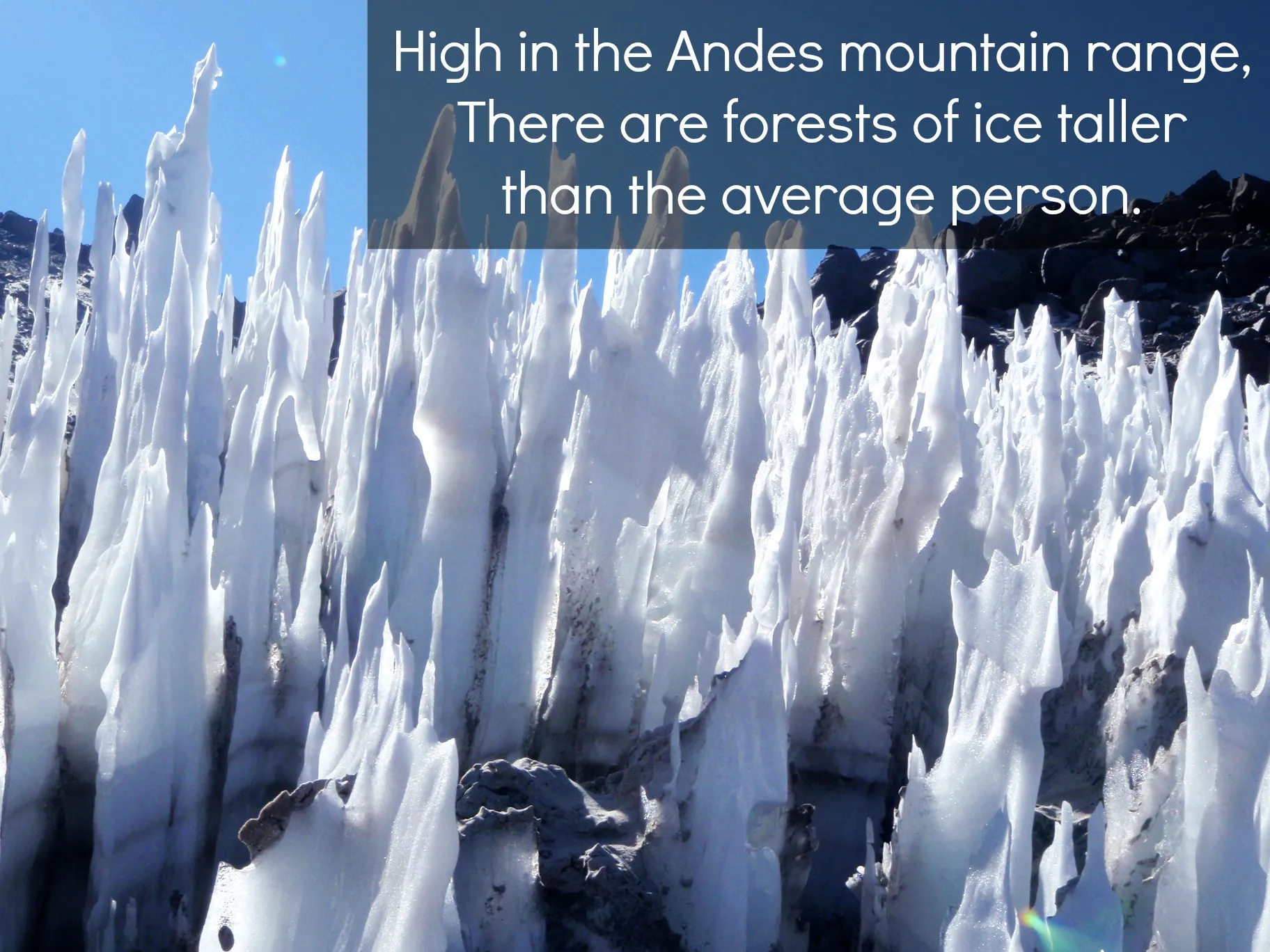

Penitentes are striking snow formations shaped by intense sunlight, dry air and sublimation in the high-altitude Andes.
High in the Andes Mountains, nature creates an extraordinary landscape that can look less like a frozen wilderness and more like an army standing in formation. Known as penitentes, these sharp, towering snow formations rise from the surface in some of the world’s highest and driest mountain environments.
Penitentes are particularly associated with the Andes mountain range stretching between Chile and Argentina. They generally form at elevations above 4,000 metres and can range in size from just a few inches to around 5 metres, or 16 feet, in height.
But how does ordinary snow transform into such unusual, pointed structures?
Scientists say the phenomenon results from a combination of intense sunlight, extremely dry air and freezing conditions. At high elevations, strong solar radiation reaches the snow surface. Because the surrounding atmosphere is exceptionally dry, parts of the snow do not simply melt into liquid water. Instead, the ice can change directly from a solid state into water vapour, a process known as sublimation.
Over time, this process removes some portions of the snow surface more rapidly than others. Areas that are more exposed to sunlight gradually disappear, while deeper or relatively protected sections remain. The uneven erosion eventually produces sharp ridges and towering spikes across the snowfield.
The resulting formations can resemble a frozen forest, a field of white towers or, from a distance, rows of figures dressed in white.
The name penitentes is also linked to their appearance. The Spanish word refers to people performing penance. The formations were named because their shape was considered reminiscent of religious penitents who historically wore white garments and pointed hoods during religious processions.
Naturalist Charles Darwin also observed these unusual snow formations during his 1835 journey through the Andes, helping bring attention to them.
About The Author