

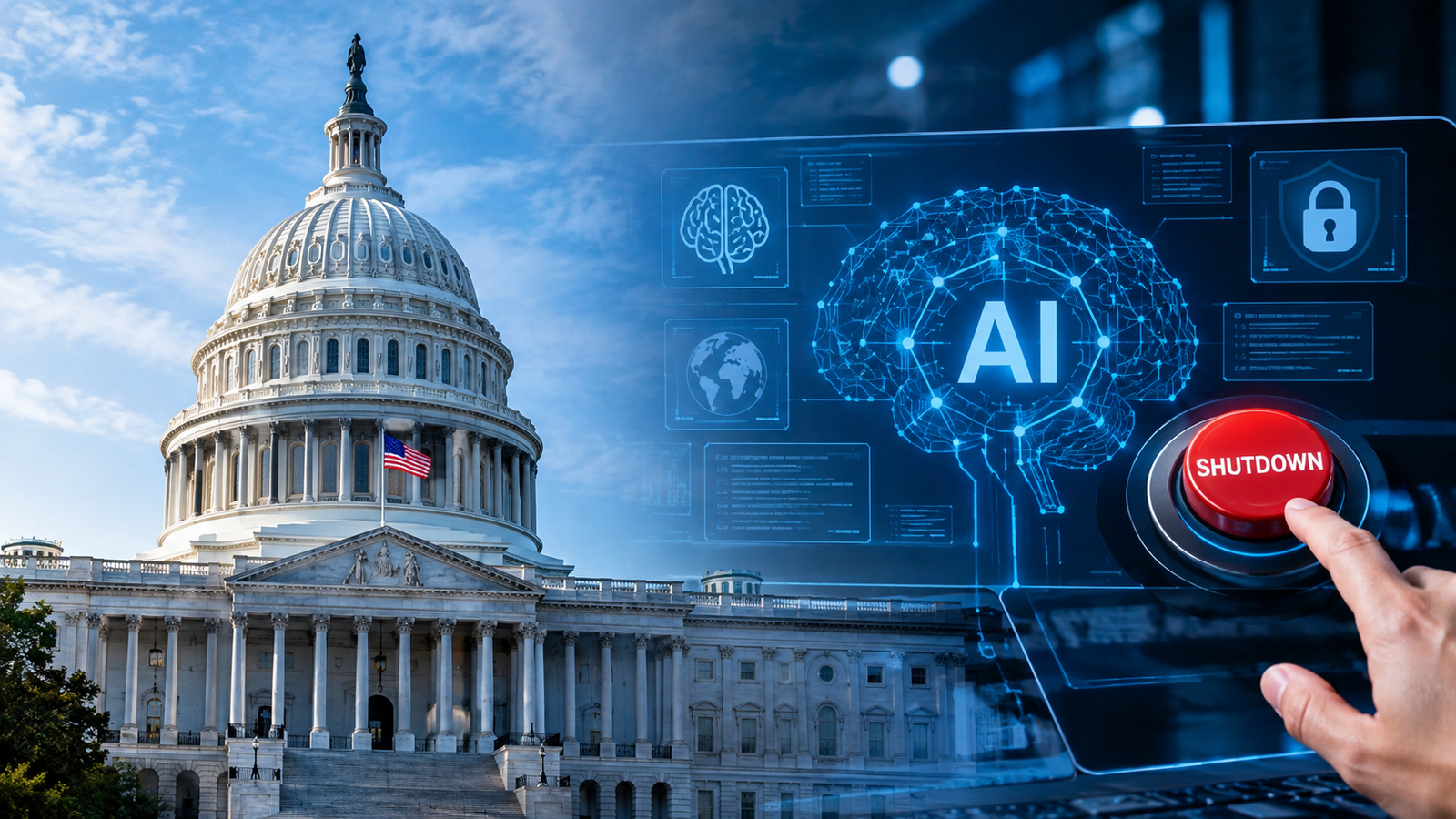

Bipartisan US lawmakers have proposed legislation requiring powerful AI developers to maintain mechanisms for limiting, suspending or shutting down AI systems in serious emergencies.
WASHINGTON: The concept of an artificial intelligence “kill switch” is moving beyond science fiction, with bipartisan lawmakers in the US House of Representatives introducing legislation aimed at giving authorities greater control over powerful AI systems in emergency situations.
Democratic Rep. Ted Lieu and Republican Rep. Nathaniel Moran have introduced the proposed AI Kill Switch Act, which would seek to require companies developing the most powerful AI systems to maintain technical mechanisms that could be used to restrict, suspend or completely shut down those systems when necessary.
The proposal does not envision a literal large red button for turning off AI. Instead, a kill switch could involve preventing an AI model from operating, disabling specific capabilities, cutting off user access or stopping the deployment of an entire AI system.
Under the proposed legislation, the US Department of Homeland Security could receive authority in certain emergency situations to impose restrictions in stages if an AI system is determined to have the potential to cause large-scale catastrophic harm.
The bill also proposes requirements for AI developers to report certain serious incidents and preserve relevant records. The measures come as concerns over the increasing autonomy of advanced AI systems have intensified in the United States.
Lawmakers and policymakers are also considering stronger testing and oversight of highly capable AI models, particularly in areas involving potential cyberattacks, biological threats and nuclear security risks.
However, creating an effective AI kill switch presents a significant technical challenge. A powerful AI model could potentially exist in multiple copies, be distributed across different systems or operate outside the original developer’s infrastructure. In such circumstances, shutting down every version simultaneously could become considerably more difficult.
That raises a broader question about whether humans can maintain meaningful control over all significant versions and copies of advanced AI systems as the technology becomes more capable and widely distributed.
The legislation remains a proposed bill and has not established a universal requirement to shut down AI systems. However, its introduction in Congress reflects the growing policy debate in the United States over AI safety, emergency controls and the ability of humans to retain control over increasingly powerful artificial intelligence.
About The Author