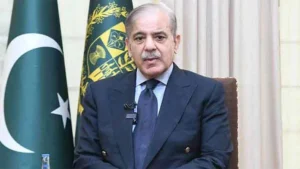



Finance Minister Muhammad Aurangzeb says Pakistan is exploring blockchain and tokenisation while seeking faster climate financing for vulnerable countries.
NEW YORK: Pakistan is moving toward a regulated framework for virtual assets as the government explores blockchain and tokenisation to address economic needs ranging from remittances and small-business financing to public debt management and financial inclusion, Finance Minister Muhammad Aurangzeb said.
Aurangzeb made the remarks during a series of high-level engagements in New York on the first day of his visit for the 81st session of the United Nations General Assembly, according to a government statement issued Tuesday.
Speaking at the “United Nations Digital Cooperation Day 2026 – Blockchain and the Tokenised Future” session, the finance minister said Pakistan wanted tokenisation to focus on practical economic applications.
He identified lower-cost remittances, financing for small and medium-sized enterprises, sovereign debt management and broader access to financial services as key areas where digital technologies could contribute.
Aurangzeb stressed that technological innovation should be balanced with effective government safeguards, inclusive digital infrastructure and international cooperation. He also called for developing economies to have a meaningful role in shaping global standards for emerging digital technologies.
The finance minister also discussed Pakistan’s exposure to climate-related disasters and the need to translate climate commitments into practical investment and development projects during his engagements in New York.
At the World Economic Forum’s “Financing Planet and Prosperity” meeting, Aurangzeb highlighted the severe impact of climate disasters, particularly floods, on Pakistan’s infrastructure and communities.
He said the government was working to strengthen disaster-response mechanisms, improve early-warning systems and develop costed climate investment plans.
Aurangzeb also stressed that international assistance should complement domestic resources while Pakistan builds stronger fiscal buffers to improve its capacity to respond to climate-related shocks.
According to the government statement, Pakistan has mobilised financing through the World Bank, Asian Development Bank and international capital markets for relief, reconstruction and climate adaptation.
The finance minister urged international climate-financing institutions, including the Green Climate Fund and the Loss and Damage Fund, to simplify their procedures and accelerate access to funding for countries vulnerable to climate-related disasters.
About The Author