
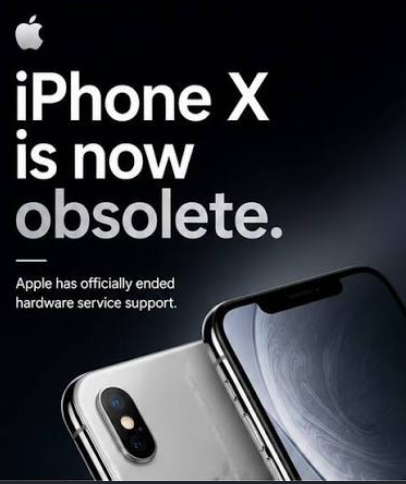

Apple has officially moved the iPhone X into its obsolete product category, significantly limiting hardware repairs and replacement parts.
Apple has officially added the iPhone X to its “obsolete” product category, marking the end of a major chapter for one of the company’s most influential iPhone models.
The classification generally means Apple and its authorized service providers no longer offer official hardware repairs or replacement parts for the device. As a result, owners of the iPhone X may face greater difficulty obtaining official assistance for issues such as damaged displays, worn-out batteries or faulty charging ports.
Apple typically considers products obsolete after more than seven years have passed since the company stopped distributing them for sale, although the final classification is determined by Apple.
The iPhone X was introduced in November 2017 and discontinued in September 2018. Its addition to the obsolete list reflects the end of Apple’s long-term hardware service cycle for the device.
The obsolete designation is more restrictive than Apple’s “vintage” category. Some vintage products can still qualify for limited repairs depending on the availability of replacement components. Obsolete products, however, generally no longer receive hardware service from Apple or its authorized service providers.
Why the iPhone X was important
The iPhone X represented a major turning point in Apple’s smartphone design. It was the first iPhone to feature Face ID and an OLED display, while Apple removed the traditional Home button and Touch ID.
The phone introduced a nearly edge-to-edge display with the distinctive notch and replaced the familiar Home button with gesture-based navigation. These changes helped establish the design language that influenced subsequent generations of iPhones.
Its facial-recognition system, OLED screen and new interface also reflected a broader shift in the smartphone industry toward larger displays and biometric authentication.
For people who continue using the iPhone X, the obsolete classification means official hardware support will now be significantly limited. Owners whose devices develop serious hardware problems may have to rely on third-party repair providers or consider replacing their phones.
About The Author