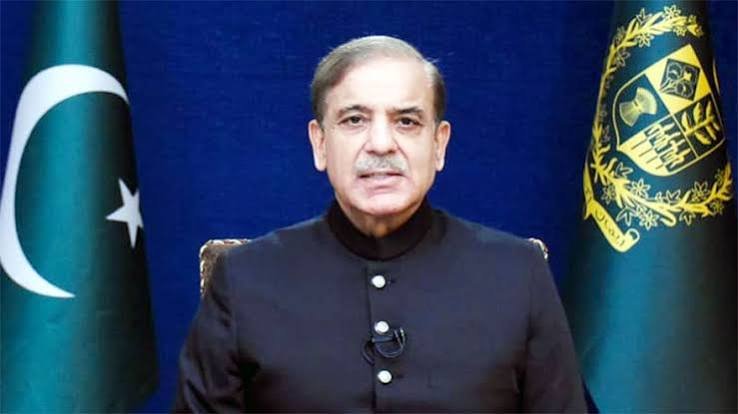

SIPRI’s 2026 assessment warns that nuclear-armed nations are expanding and modernizing their arsenals, raising concerns over global stability and the future of arms control.
Global nuclear stockpiles are growing once again, marking a significant reversal of decades-long disarmament efforts, according to the latest report released by the Stockholm International Peace Research Institute (SIPRI). The institute warned that rising geopolitical tensions and rapid military modernization are increasing the role of nuclear weapons in national security strategies.
The SIPRI Yearbook 2026 revealed that the world’s nine nuclear-armed states including the United States, Russia, China, India, and Pakistan — continued upgrading their nuclear forces throughout 2025. Of the estimated 12,187 warheads worldwide, nearly 9,745 remain in military stockpiles, with more than 2,100 on high operational alert.
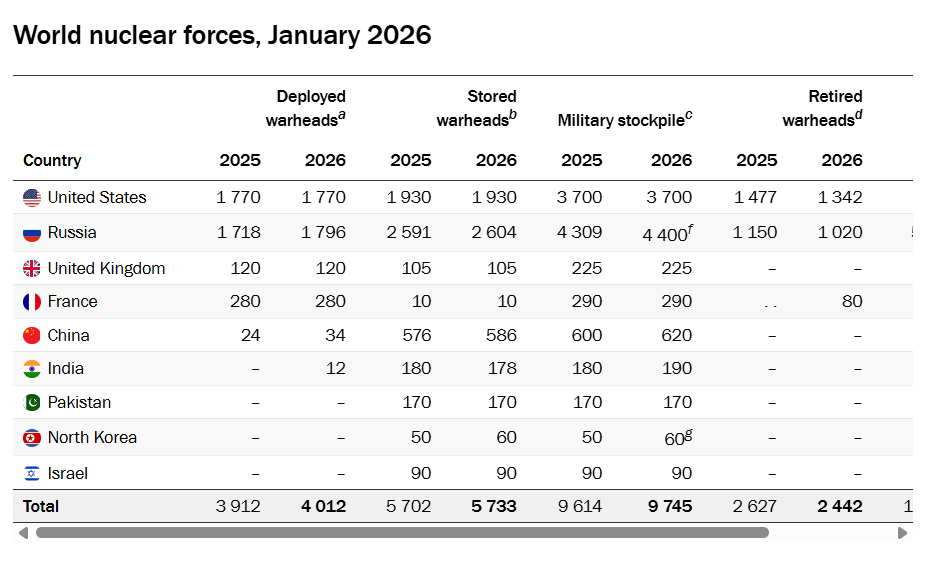
China recorded the fastest growth, expanding its arsenal to an estimated 620 warheads. India increased its stockpile to 190 warheads and continued developing long-range delivery systems, while Pakistan maintained roughly 170 warheads but expanded missile programs and fissile material production.
The report also highlighted concerns following a brief India-Pakistan military confrontation in May 2025, underscoring the risks of escalation between nuclear-armed neighbors.
Adding to global uncertainty, the expiration of the New START treaty and the failure of the 2026 Nuclear Non-Proliferation Treaty review conference to reach consensus have weakened international arms-control efforts. SIPRI warned that declining transparency, fading diplomatic engagement, and advancing weapons technology are creating a more unstable and unpredictable nuclear landscape.
About The Author