
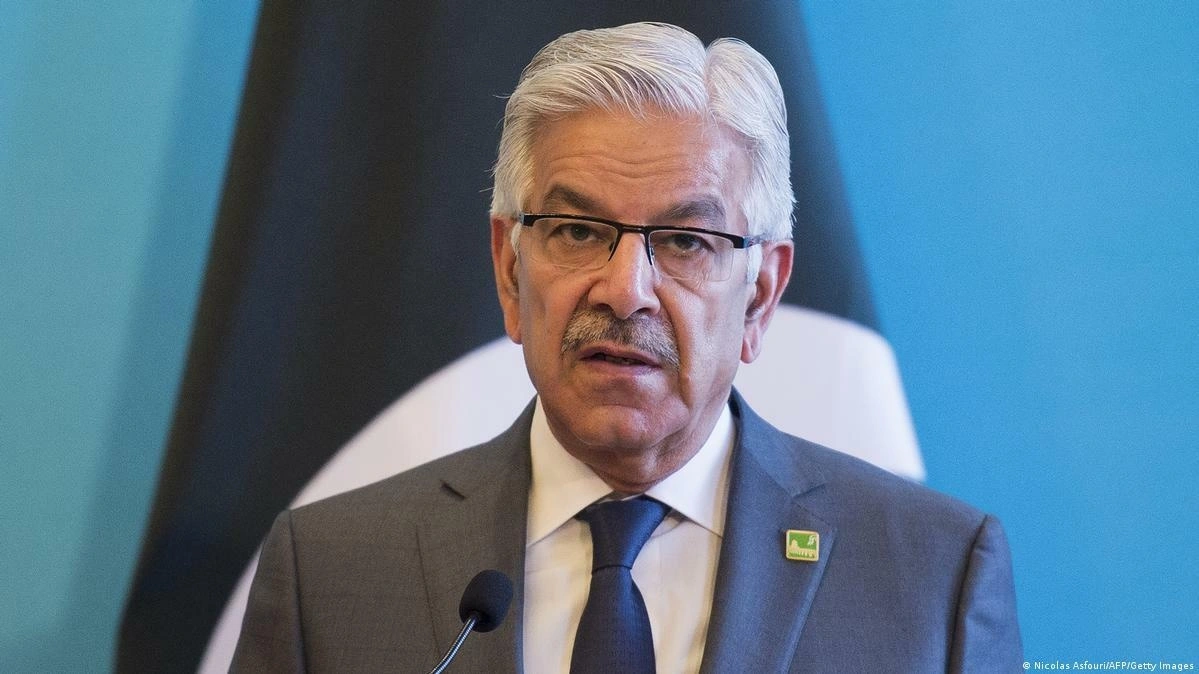

Defence Minister Khawaja Asif says any decision regarding a meeting with PTI founder Imran Khan will be taken collectively by the government and its allies.
ISLAMABAD: Defence Minister Khawaja Asif has said that any decision regarding a meeting with Pakistan Tehreek-e-Insaf founder Imran Khan will be taken through consultation between the government, its allies and what he described as the country’s “hybrid system.”
Speaking in an interview with ARY News, Asif said the decision would not rest with the government alone, suggesting that consultations involving the broader governing arrangement would determine whether political figures are allowed to meet the incarcerated PTI founder.
His remarks come amid continuing political tensions surrounding Imran Khan’s incarceration and restrictions on meetings with him. Asif also warned that the government’s response to PTI’s planned Sept. 27 protest would depend on how the demonstration is conducted.
He said authorities would not interfere if the protest remained peaceful, but indicated that a different response could follow if the demonstration involved confrontation or disorder. He blamed PTI for what he described as the government’s continued hardline approach toward the party.
Asif criticizes PTI leadership
The defence minister also criticised divisions within PTI, claiming that senior party figures were publicly accusing one another and that internal disputes had intensified.
He referred to allegations concerning funds reportedly associated with former Khyber Pakhtunkhwa Chief Minister Ali Amin Gandapur and said he had heard statements made by PTI leaders regarding the issue. The allegations could not independently be verified from the remarks provided.
Call for bureaucratic accountability
Discussing governance and accountability, Asif said Pakistan’s bureaucracy had historically exercised significant influence over state affairs but had not faced accountability comparable to politicians and members of the military.
He argued that strengthening accountability across institutions was necessary and rejected the perception that bureaucratic influence was confined to any particular government.
Economic challenges and new administrative units
On the economy, Asif acknowledged that Pakistan continued to face several serious challenges but said there was considerable room for improvement. He described the burden of addressing the country’s problems as a shared responsibility involving the government, institutions and coalition partners.
Regarding proposals for new provinces or administrative units, the minister said the debate was continuing but personally favoured strengthening local governments. He argued that greater resources should reach tehsil and district levels, particularly for infrastructure development.
The minister’s comments underline the continuing political uncertainty surrounding Imran Khan’s imprisonment and PTI’s relationship with the federal government. His reference to a collective decision on meetings with the PTI founder is also likely to keep the debate over political engagement and the country’s governance structure in focus.
About The Author