

Government sources cite thousands of terrorism incidents in Khyber Pakhtunkhwa and call for scrutiny of police staffing, counterterrorism resources, security spending and the constitutional framework for addressing internal unrest.
Khyber Pakhtunkhwa recorded approximately 6,200 terrorism incidents and 1,200 deaths over the past two years, according to figures released by Defense Minister Khawaja Asif on Oct. 5, raising questions about the province’s security strategy, police capacity, counterterrorism resources and the use of public funds.
Government sources say a comprehensive assessment is needed of police deployment, the performance of the Counter Terrorism Department (CTD), funding for security infrastructure, the protection of police posts and progress in terrorism-related cases.
The figures have also brought renewed attention to intelligence coordination, border monitoring and the measures required to prevent attacks in the province.
Suicide attacks and police deployment
According to government sources, 37 suicide attacks over the past two years were attributed to Afghan nationals. Fourteen suicide attacks were also identified during the current year, with Afghan nationals reportedly accounting for the majority of those involved.
The claims require verification against official records, including the identities of those implicated in individual attacks. Authorities also face questions about intelligence sharing, the identification of suspected networks and the prevention of future attacks.
Khyber Pakhtunkhwa Police has an estimated strength of 125,000 personnel, according to government sources. Approximately 13,000 officers are reportedly assigned to VIP security and protocol duties, while around 17,000 posts are said to be vacant.
These figures raise questions about staffing levels in terrorism-affected districts, recruitment efforts and the availability of modern training, protective equipment and operational resources.
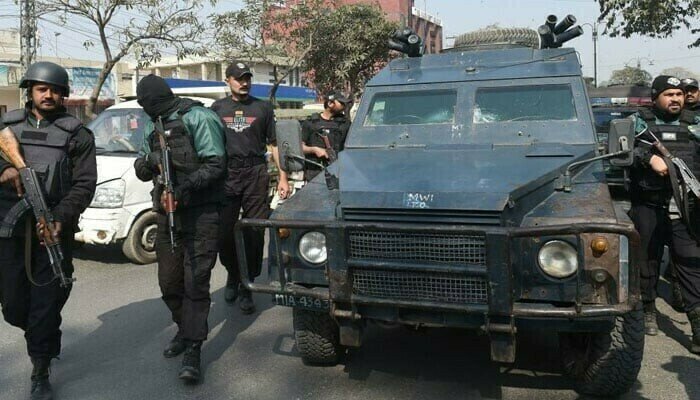
The CTD’s capacity in the merged districts is another area requiring scrutiny. Government sources put its strength at approximately 3,300 personnel, with 17 bulletproof vehicles available. Further details on permanent and contract employees, vacancies, investigative facilities and field-operation resources would help establish the department’s operational requirements.
Security funding and pending cases
Funding for the construction and fortification of police posts is also under scrutiny. Government sources say Rs 42 billion was sought for the work, while the provincial government reportedly released only Rs 1.2 billion.
A comparison of budget allocations, actual releases, expenditure records and completed projects would be necessary to assess the funding position. Any allegation of financial misuse would require independent audit findings or supporting official documentation before being treated as established fact.
Government sources also estimate that Khyber Pakhtunkhwa received approximately Rs 8.5 trillion in federal transfers and other allocations between 2010 and 2025. The reported total includes National Finance Commission transfers, additional funding associated with the war against terrorism, allocations for merged districts and other direct transfers.
A breakdown of spending on police, the CTD, the judicial system, assistance for displaced people and security infrastructure would help clarify how the resources were used.
Meanwhile, more than 3,000 terrorism-related cases are reportedly pending with prosecutors. Their progress depends on factors including investigation quality, evidence collection, witness protection, prosecution preparation and the pace of court proceedings. Official case data would be needed to establish the causes of delays and identify areas requiring reform.
Hold, Build and Transfer strategy
Government sources have also emphasized a “Hold, Build and Transfer” strategy for terrorism-affected areas. Under this approach, authorities first secure an area, then rebuild infrastructure and institutions before transferring administrative responsibilities to civilian authorities.
Its implementation requires functioning police and courts, an effective local administration, rehabilitation for affected families and access to essential public services.
The debate has also drawn attention to the constitutional options available to the federal government when serious internal unrest threatens public safety and the functioning of government.
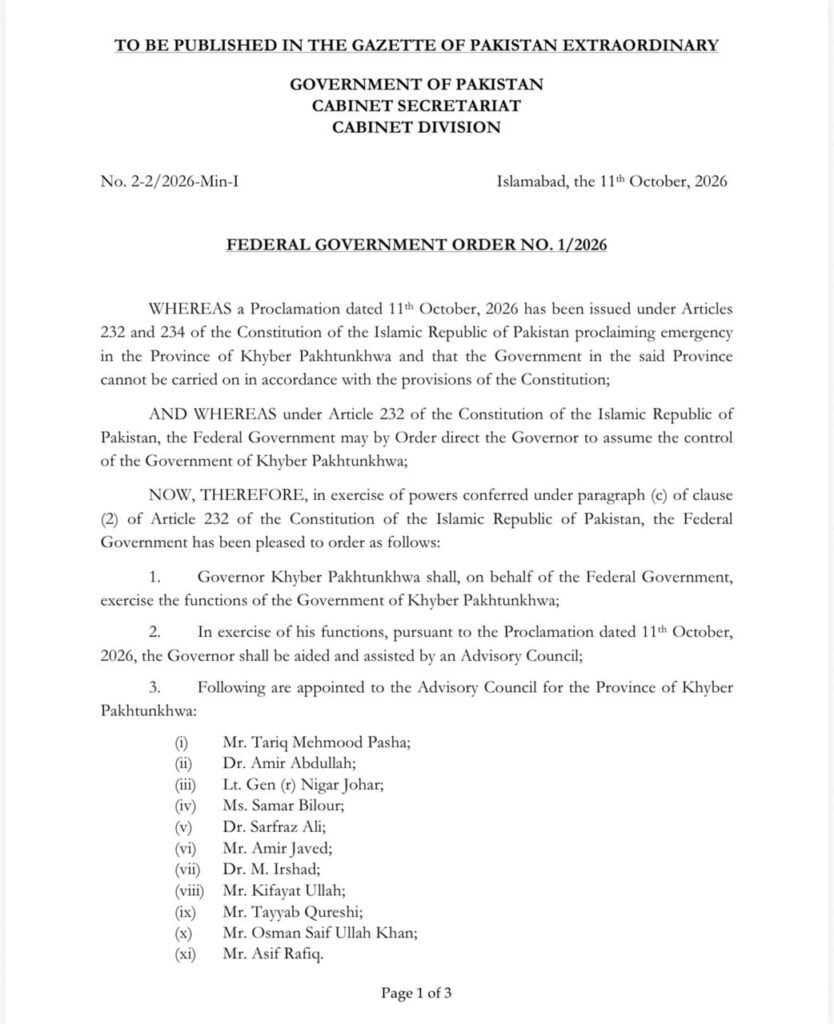
Article 232 of Pakistan’s Constitution provides for the proclamation of an emergency in specified circumstances, including war, external aggression or grave internal disturbance beyond a provincial government’s control. An emergency on the grounds of internal disturbance is subject to constitutional requirements, including a resolution by the relevant provincial assembly.
Article 234 provides a separate procedure for circumstances in which a provincial government cannot be carried on in accordance with the Constitution. Emergency rule under Article 232 and a constitutional breakdown procedure under Article 234 are distinct mechanisms and should not be treated as interchangeable.
For residents of Khyber Pakhtunkhwa, restoring security is essential to education, employment, business activity, freedom of movement and everyday life. The figures cited by government sources have intensified debate over security policy, the distribution of resources and the responsibilities of federal and provincial authorities.
Author