
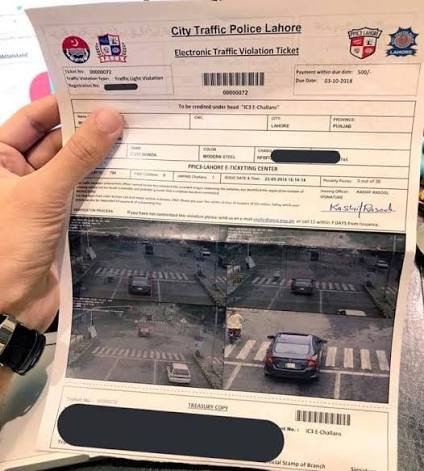

Lahore traffic police have proposed linking unpaid digital traffic fines to selected CNIC, passport, vehicle and police services, prompting legal objections.
LAHORE: Lahore traffic police have proposed linking the recovery of pending e-challan dues to several core public services, including CNICs, passports, vehicle transactions and selected police services, prompting strong objections from legal circles.
Chief Traffic Officer (CTO) Syed Abdul Raheem Shirazi has recommended that certain services at Police Khidmat Markaz be made conditional on the clearance of outstanding digital traffic challans.
According to the City Traffic Police spokesperson, a formal communication has been sent to Punjab DIG Traffic Police and the Punjab Information Technology Department (PITB) regarding the proposed mechanism.
The proposal includes stopping the issuance of duplicate CNICs, passport renewals, vehicle sale and purchase transfers, and certain police services for e-challan defaulters until their outstanding dues are cleared.
The traffic police said the mechanism was intended to improve recovery of pending digital challans, increase government revenue and reduce the administrative effort and expenditure involved in recovering unpaid fines. The spokesperson also said timely recovery could help expedite the disposal of cases pending before courts.
However, the proposal has drawn criticism from legal experts, with senior lawyer Omais Younis describing it as unlawful and unconstitutional.
Younis argued that an outstanding or disputed traffic challan does not automatically constitute a final adjudication and therefore should not provide a basis for depriving citizens of essential legal and administrative documents.
He referred to Article 10-A of the Constitution, which guarantees fair trial and due process, and said a digital challan initially represents an allegation rather than necessarily a final determination.
The lawyer also cited a Supreme Court judgment issued on Feb. 18, 2026, which he said held that even an executing court could not block a judgment-debtor’s CNIC to enforce a money decree or demand security where the law did not authorize such action.
According to Younis, Section 51 of the Code of Civil Procedure provides recognized methods of executing decrees but does not authorize the blocking of CNICs.
He further argued that restricting access to a CNIC or passport could affect a citizen’s legal, economic and social activities and potentially impact family members.
Younis said a law firm was preparing to challenge the proposed executive action before the Lahore High Court to protect citizens’ legal rights.
About The Author