
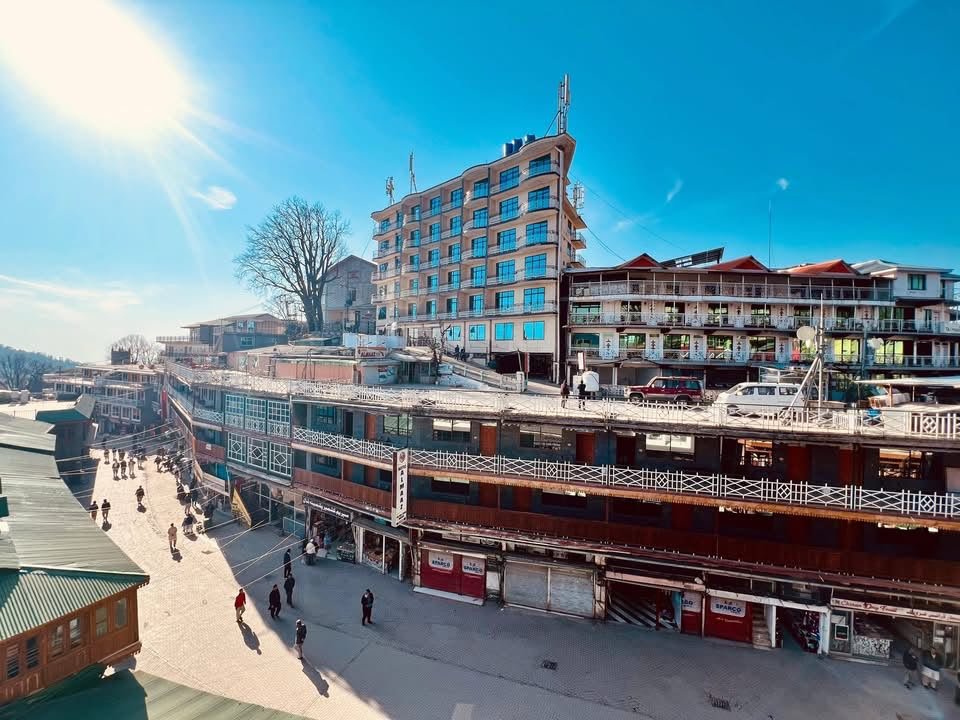

For more than five decades, Murree widely known as the Queen of the Hills has witnessed numerous beautification projects and development operations centered on Mall Road and its surrounding areas. Despite repeated promises of modernization, these initiatives have often been viewed as benefiting contractors and influential groups more than the city itself. Expensive renovation projects were launched repeatedly, yet poor-quality construction frequently deteriorated within a short period, leaving Murree’s historic appearance overshadowed by temporary improvements.
The repeated allocation of millions of rupees for Mall Road beautification every few years has raised questions about the durability and quality of previous projects. Concerns have also been expressed over whether public funds were spent effectively and whether those responsible for substandard work were ever held accountable.
The current administration is attempting to redevelop Lower Bazaar and Mall Road on more sustainable foundations while maintaining stricter oversight of contractors. However, concerns remain regarding construction standards, material selection and the overall implementation of development projects.
One of the major initiatives currently underway is the establishment of an international-standard theme park over approximately twenty kanals of land. The project is intended to reduce encroachments, improve the tourist experience and transform Murree into a model hill station. Compensation is reportedly being provided to affected occupants and tenants in accordance with legal procedures.
At the same time, it has been argued that hotel workers, salesmen and other employees whose livelihoods depended on these businesses also deserve adequate consideration, as they played a significant role in supporting the local tourism economy.
Murree’s construction history has long remained a subject of public debate. Numerous multi-storey hotels and commercial buildings emerged around General Post Office Chowk after 1980, while similar patterns of development expanded across Kashmir Point, Pindi Point, Sunny Bank and adjoining areas. Questions have frequently been raised over whether many of these buildings exceeded approved construction plans or violated municipal bylaws.
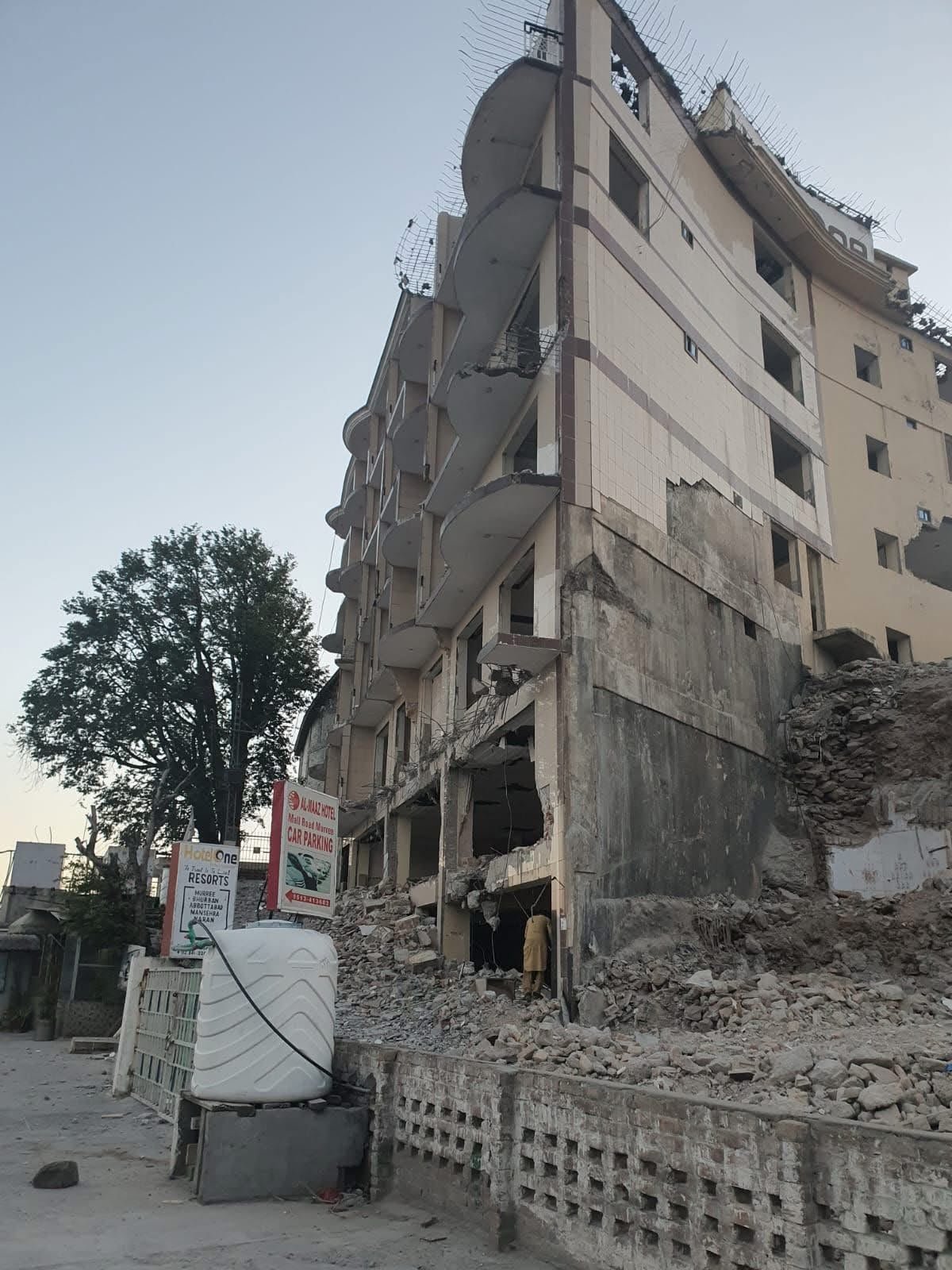
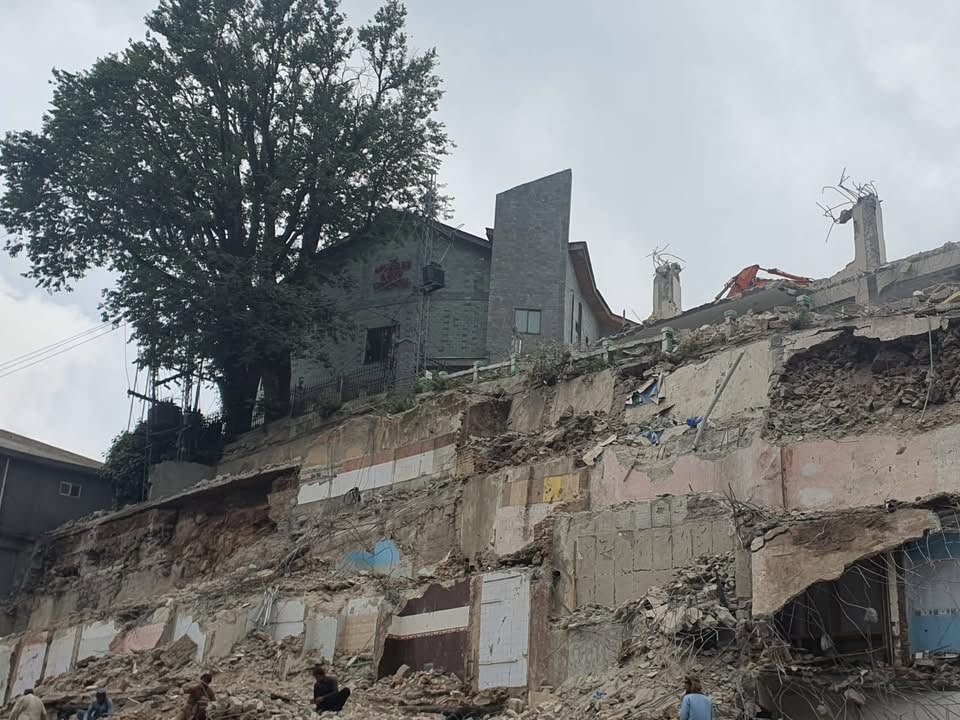
Similar concerns have also been linked to properties located within the proposed theme park site, where some buildings are alleged to have extended beyond their approved limits. Under the ongoing operation, compensation is being paid for acquired land, while only those portions of structures that reportedly violate approved building plans are expected to be removed.
Attention has also been drawn to the historical circumstances surrounding several valuable properties in the area, with claims that financial difficulties and administrative weaknesses allowed influential groups to gain control over important locations.
Beyond legal and administrative issues, the operation has also sparked broader debate about public responsibility, urban planning and the protection of public land. Questions continue to be raised about whether decades of unauthorized construction and weak enforcement have contributed to Murree’s current challenges.
Building regulations introduced during the British era reportedly permitted construction of no more than two storeys across much of Murree, particularly along Mall Road. The presence of numerous high-rise commercial buildings has therefore renewed discussion about how planning regulations were enforced over the past several decades.
Concerns have also been expressed regarding the alleged role of corruption in allowing unauthorized construction to continue. Claims suggest that illegal floors were added after unofficial payments and that successive administrations failed to enforce planning laws consistently. If illegal structures are removed today, many believe accountability should also extend to those responsible for approving or overlooking such developments.
Questions have further been raised regarding historical records of building approvals, the regularization of encroachments and the role played by different administrations over the years. It is argued that examining these records would provide a clearer understanding of how Murree’s urban landscape changed so dramatically.
Although unauthorized construction is believed to have begun decades ago, concerns intensified as commercial development expanded under successive governments. Political differences often appeared secondary to shared commercial interests, resulting in continuous construction that significantly altered Murree’s natural landscape.
For this reason, many believe that lasting reform requires more than demolishing illegal structures. Comprehensive accountability, transparent governance and consistent enforcement of planning laws are widely viewed as essential for preserving Murree’s historic identity and preventing similar violations in the future.
Attention has also been directed toward the area stretching from Habib Bank to Holy Trinity Church, which forms part of the approximately twenty-kanal site identified for the ongoing operation. Several commercial buildings, restaurants and roadside structures located within this zone have been cited as examples of long-standing encroachments. Questions have also been raised regarding kiosks established near the church wall and cantonment barrier, with claims that they generated substantial private rental income while providing only limited financial returns to the municipal administration. Some of these structures have already been removed.
Similar concerns have been highlighted in Lower Bazaar, Mochi Mandi, Qasai Mohallah, Shawala and Dhobi Ghat, where encroachments are believed to have gradually reduced public space and affected the city’s traditional character.
The improvement of Murree’s sewerage system has been described as one of the most significant aspects of the current development programme. For years, inadequate drainage and poorly connected sewer lines from hotels reportedly caused repeated blockages, allowing wastewater to overflow into Lower Bazaar and Siddique Chowk during heavy rainfall. There are also claims that parts of the historic drainage infrastructure, including iron covers and British-era stonework, were damaged or removed over time.
The ongoing restoration of Lower Bazaar includes the removal of encroachments, repair of drainage channels, repainting of buildings, beautification with flowers and the widening of roads. These measures are viewed by many as evidence that consistent planning and effective administration can significantly improve the urban environment. At the same time, it is acknowledged that encroachments by local businesses developed gradually over several generations, narrowing public roads and walkways. Public opinion on this issue remains divided, although many traders agree that wider roads will benefit future generations and strengthen tourism.
The issue of Jhika Gali has also been highlighted, where a large portion of commercial activity reportedly operated on leased land rather than privately owned property. Despite this, compensation was provided for ownership claims, construction and business losses. Concerns have nevertheless been expressed over alleged irregularities in the compensation process, including claims that influential individuals benefited disproportionately while employees and workers received comparatively limited support.
Another example frequently cited is the former British-era cemetery in Nambal village, where concerns have been raised that historical land gradually gave way to modern residential construction. Such examples are presented as evidence of broader urban planning challenges that have evolved over several decades.
The discussion also emphasizes the importance of preserving Murree’s natural beauty alongside its architectural heritage. Rapid commercial expansion, declining green spaces and increasing concrete construction are identified as factors that have significantly changed the city’s historic landscape.
Many believe that restoring Murree requires more than removing unauthorized buildings. Stronger institutional accountability, transparent governance, careful monitoring of building approvals and regular enforcement of planning regulations are widely regarded as equally important steps for achieving lasting reform.
Attention has also been drawn to the network of approximately fifty stairways constructed during the British era to provide emergency evacuation routes during earthquakes, fires and landslides. It is claimed that several of these public pathways have gradually been blocked or absorbed into private properties, reducing their usefulness during emergencies and limiting public access.
Several public concerns continue to surround the wider development programme. Questions have been raised about whether building regulations are being applied uniformly across the district, particularly as construction activity reportedly continues in Bhurban, Ghora Gali, along the Expressway, Kashmir Point and other areas. Similar concerns have been expressed regarding the quality of materials being used in beautification projects, especially the reported installation of plastic pipes instead of more durable alternatives.
The recent administrative reforms have also received praise from many local residents, who believe that progress achieved over the past few years has exceeded expectations despite challenges that remained unresolved for decades. Efforts to strengthen action against land grabbing and narcotics have similarly been viewed as contributing to improved public confidence and greater protection of private property.
At the same time, numerous rumours have circulated regarding Murree’s future development. These include claims about the relocation of divisional offices, proposed luxury hotels by foreign investors, military-controlled commercial development and the transfer of leased heritage properties to selected business groups. However, none of these claims has been officially confirmed, and they continue to circulate primarily as public speculation.
Looking ahead, several recommendations have been put forward for ensuring the long-term success of the redevelopment programme. These include protecting the livelihoods of hotel workers and sales staff affected by demolition, ensuring that compensation reaches genuine beneficiaries directly, avoiding the use of construction materials that have previously failed under Murree’s severe weather conditions and adopting infrastructure capable of withstanding heavy rainfall, snowfall and continuous tourist activity.
Ultimately, Murree’s future depends not only on removing unauthorized structures but also on transparent planning, equal enforcement of building regulations and responsible urban management. Sustainable development, effective accountability and the preservation of the city’s natural and historical character are widely regarded as essential for ensuring that the Queen of the Hills retains its identity while meeting the demands of modern tourism and future generations.
About The Author