

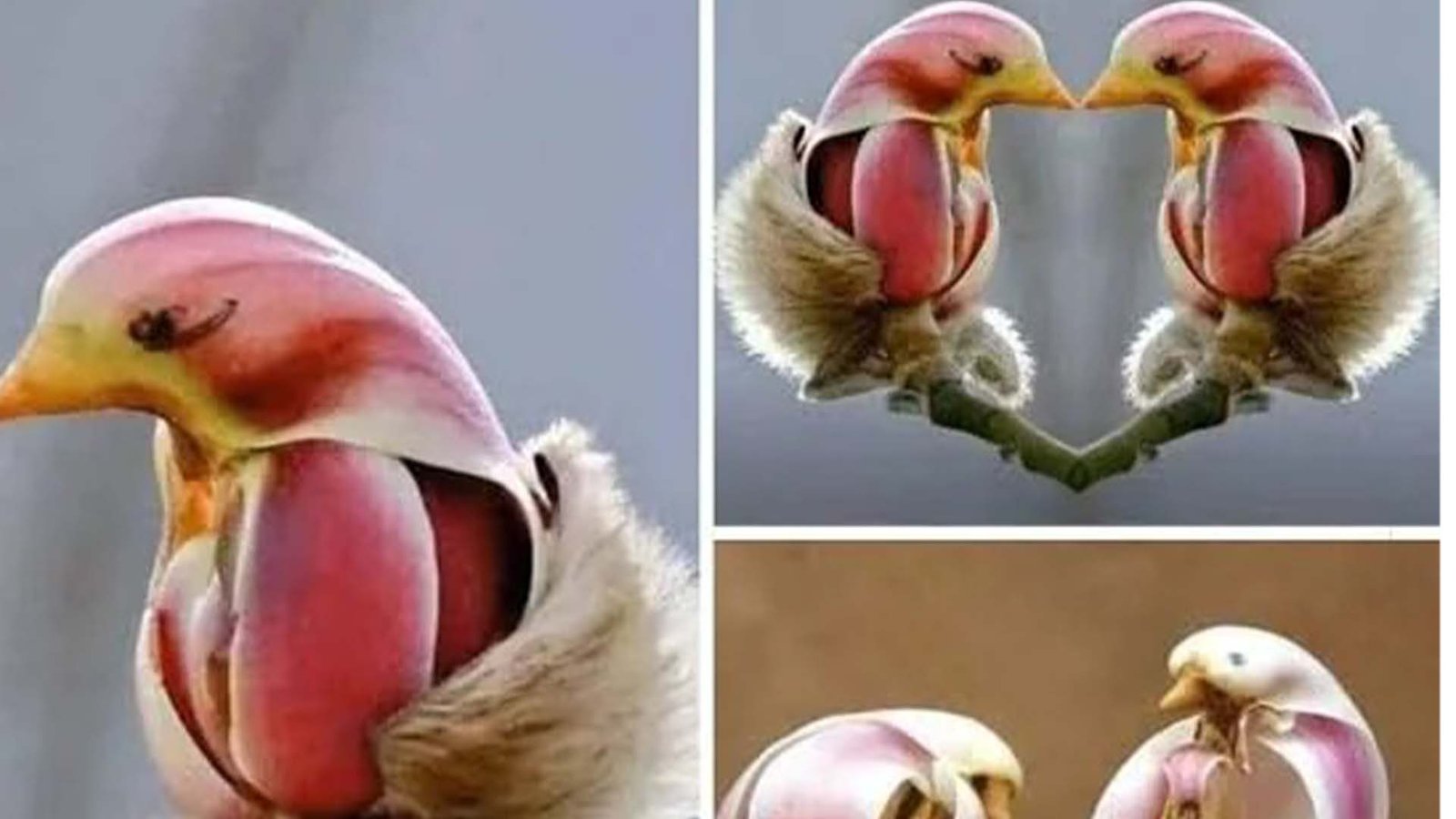

A striking natural illusion emerging from China has captured global attention, where the early buds of a rare magnolia species appear uncannily similar to small birds. The visual phenomenon, often described as surreal by observers, has sparked curiosity across social media and botanical circles alike.
The plant in question, the Yulan magnolia, is native to China and has been cultivated for nearly 1,500 years, particularly around Buddhist temples. Known for blooming in late winter or early spring, the tree sheds its leaves before producing white or pale pink flowers on bare branches, creating a dramatic seasonal display.
What makes this species particularly fascinating is the appearance of its unopened buds. When viewed from specific angles, the tightly wrapped petals, pointed tips, and subtle brownish markings create an optical illusion resembling a bird’s body, beak, and even eyes. These visual coincidences intensify the perception of a living creature rather than a plant structure.
Botanists explain that this resemblance is not an intentional design of nature but a coincidental outcome of morphology. The bud structure, shaped by evolutionary adaptation over millions of years, happens to align in a way that triggers pareidolia—a psychological effect where the human brain identifies familiar patterns, such as faces or animals, in random shapes.
Experts further note that the species itself is ancient, dating back approximately 95 million years. This timeline predates the existence of modern birds, reinforcing the scientific view that the resemblance is purely coincidental rather than evolutionary mimicry.
Once fully bloomed, the illusion disappears entirely. The buds transform into large, fragrant, cup-shaped flowers, revealing the true botanical form of the magnolia. What initially appears as a bird-like figure resolves into a classic floral structure, underscoring the role of perception in shaping human interpretation of natural beauty.
About The Author