
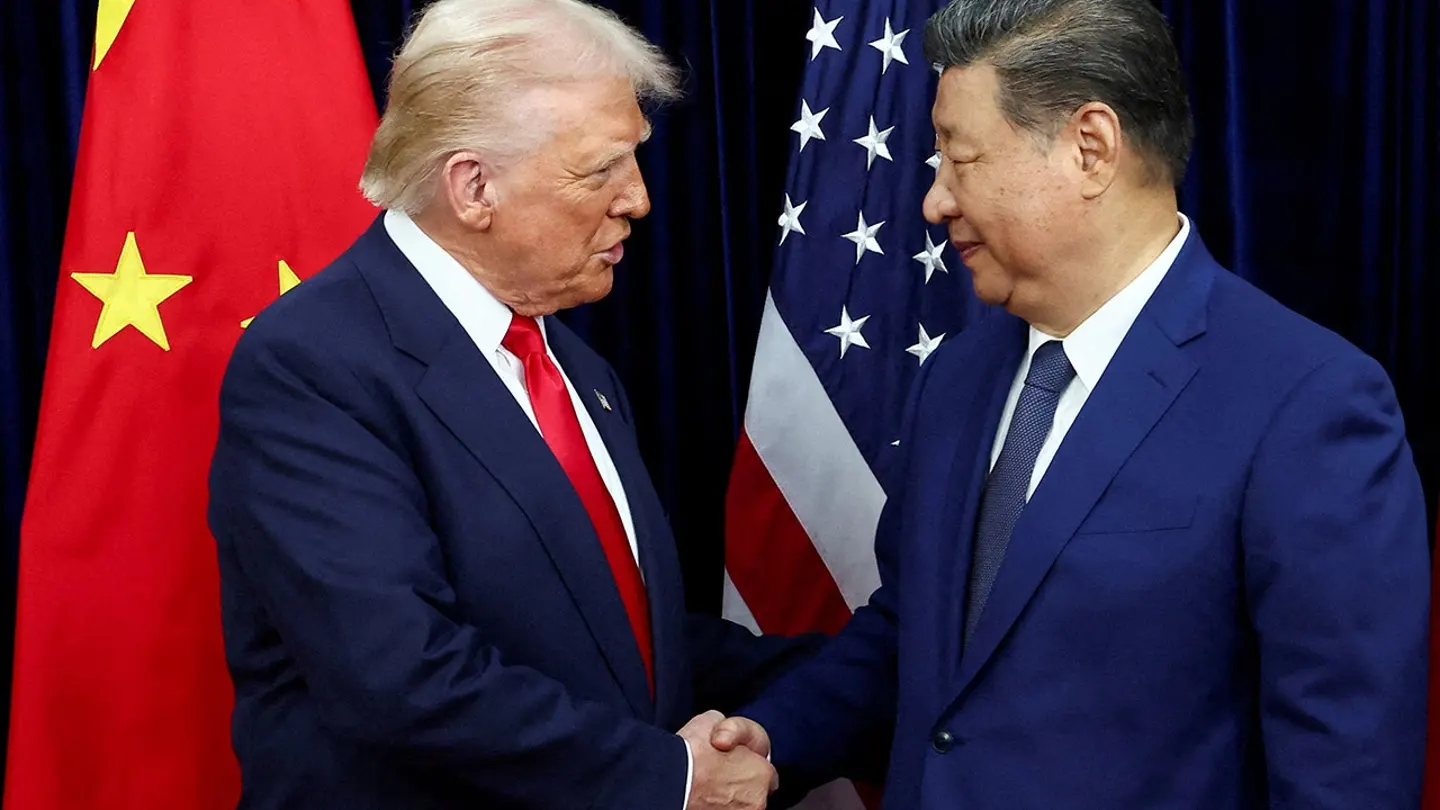

A rare and highly restrictive digital security regime has reportedly shadowed the delegation accompanying former US President Donald Trump during a visit to China, highlighting escalating concerns over cyber espionage risks in one of the world’s most sensitive geopolitical environments.
Officials involved in the trip were instructed to leave behind personal mobile phones and instead rely on limited-function secure devices and temporary laptops, reflecting fears that any connected hardware could be compromised in a high-intensity cyber threat landscape.
According to details shared about the security protocols, even routine actions such as charging devices were treated as potential vulnerabilities. US personnel were warned against using USB ports, amid concerns over “juice jacking” attacks, where compromised charging points or hardware interfaces could be used to extract data or install malicious software without user awareness.
The restrictions were not limited to government staff alone. Senior executives traveling with the delegation from major global corporations including Apple, Boeing, Qualcomm, and BlackRock were also subject to the same stringent cybersecurity rules, underscoring the perceived scale of digital risk associated with the visit.
Cybersecurity experts note that such measures reflect a growing doctrine in international diplomacy where physical security is no longer sufficient without strict digital containment strategies. In environments considered highly targeted for cyber operations, even routine connectivity can be treated as a strategic liability.
The reported protocol illustrates how modern diplomatic travel is increasingly shaped not only by political negotiations but also by invisible cyber boundaries that define what information can safely cross borders.
As global tensions around data security intensify, such “digital blackout” strategies are likely to become more common during high-level international engagements involving sensitive political and corporate actors.
About The Author