
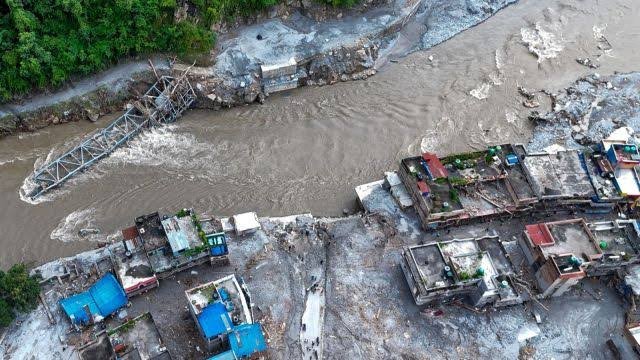

Nepal’s devastating flash floods have killed at least 626 people, with more than 2,000 still missing as rescuers search damaged communities near the China border.
KATHMANDU: Nepal’s death toll from catastrophic flash floods near the China border has risen to at least 626, while more than 2,000 people remain missing as rescue teams continue searching for survivors.
The disaster struck the Bhote Koshi River area on Aug. 26, causing widespread destruction in border communities and damaging homes, roads, bridges, hydropower facilities and other critical infrastructure.
Nepalese authorities have mobilized security forces, disaster-management teams and local agencies for rescue, evacuation and relief operations. Thousands of people have already been brought to safety, but difficult terrain, unstable conditions and damaged infrastructure are complicating the response.
The scale of the tragedy has been particularly concerning because the affected region is frequented by tourists, pilgrims and foreign workers. Nepal’s Foreign Ministry said in its latest update that 538 bodies had been recovered by Aug. 28, while 511 of 632 identified foreign nationals remained missing at that point.
Hundreds of foreigners remain unaccounted for
The flooding has triggered an international search for missing tourists, pilgrims and workers.
Nepal’s official figures included missing nationals from more than 30 countries, including India, China, the United States, Canada, Malaysia, Ukraine, Australia and the United Kingdom. Authorities are continuing to verify missing-person reports and identify survivors, meaning the figures remain subject to change.
India has reported a particularly high number of missing citizens. Its Ministry of External Affairs said 320 Indians remained missing or uncontactable following the floods, while more than 100 people of Indian origin were also reported missing.
Nepal has rescued foreign nationals from affected areas and is coordinating with neighboring countries over missing-person lists and relief operations.
Concerns over further flooding
The disaster was linked to a catastrophic event in the Himalayan region that created a new lake and raised concerns about additional flooding downstream. Authorities are monitoring river levels and unstable areas for further threats.
The floods have also severely damaged transportation and energy infrastructure, making some affected communities difficult to reach.
The Nepalese government has identified saving lives, locating missing people and providing emergency assistance as its immediate priorities. International partners have offered support, while Kathmandu has indicated a need for specialized technical assistance, including tunnel rescue expertise, DNA identification, body-preservation equipment and Bailey bridges.
About The Author