

White House confirms high-level talks as Tehran proposes easing tensions in exchange for concessions, but deep mistrust clouds breakthrough prospects
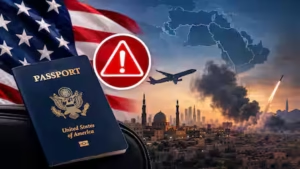
WASHINGTON: The White House has confirmed that a new peace proposal from Iran is under active review by U.S. President Donald Trump and his national security team, marking a potentially significant but uncertain step toward de-escalation in a volatile regional standoff.
According to officials, Trump convened a high-level meeting to assess Tehran’s offer, which includes reopening the strategically vital Strait of Hormuz and postponing nuclear negotiations. The proposal is seen as part of a broader attempt by Iran to ease tensions following recent hostilities and economic pressure.
The White House said no final decision has been made, with Trump expected to publicly outline Washington’s position in the coming days. U.S. officials reiterated that any agreement would require Iran to accept strict limitations on its uranium enrichment program, underscoring that American “red lines remain intact.”
From Tehran’s perspective, the proposal links the reopening of Hormuz a key global oil transit route with demands for an end to hostilities and the lifting of blockades. Iranian officials have framed the offer as a pathway to stabilize the region while preserving national interests.
Despite a nominal ceasefire, differences between the two sides persist, and diplomatic engagement has entered what analysts describe as a “delicate phase.” Backchannel diplomacy is reportedly ongoing, but a deep trust deficit continues to hinder meaningful progress.
Experts say the current moment reflects a familiar pattern in U.S.-Iran relations, where limited cooperation coexists with entrenched suspicion. While the contours of a potential agreement are emerging, significant gaps remain on core issues, particularly nuclear oversight and regional security commitments.
The outcome of these discussions could have far-reaching implications not only for bilateral relations but also for global energy markets and geopolitical stability in the Middle East. For now, the possibility of a peace deal remains on the table but decisive progress has yet to materialize.
About The Author