

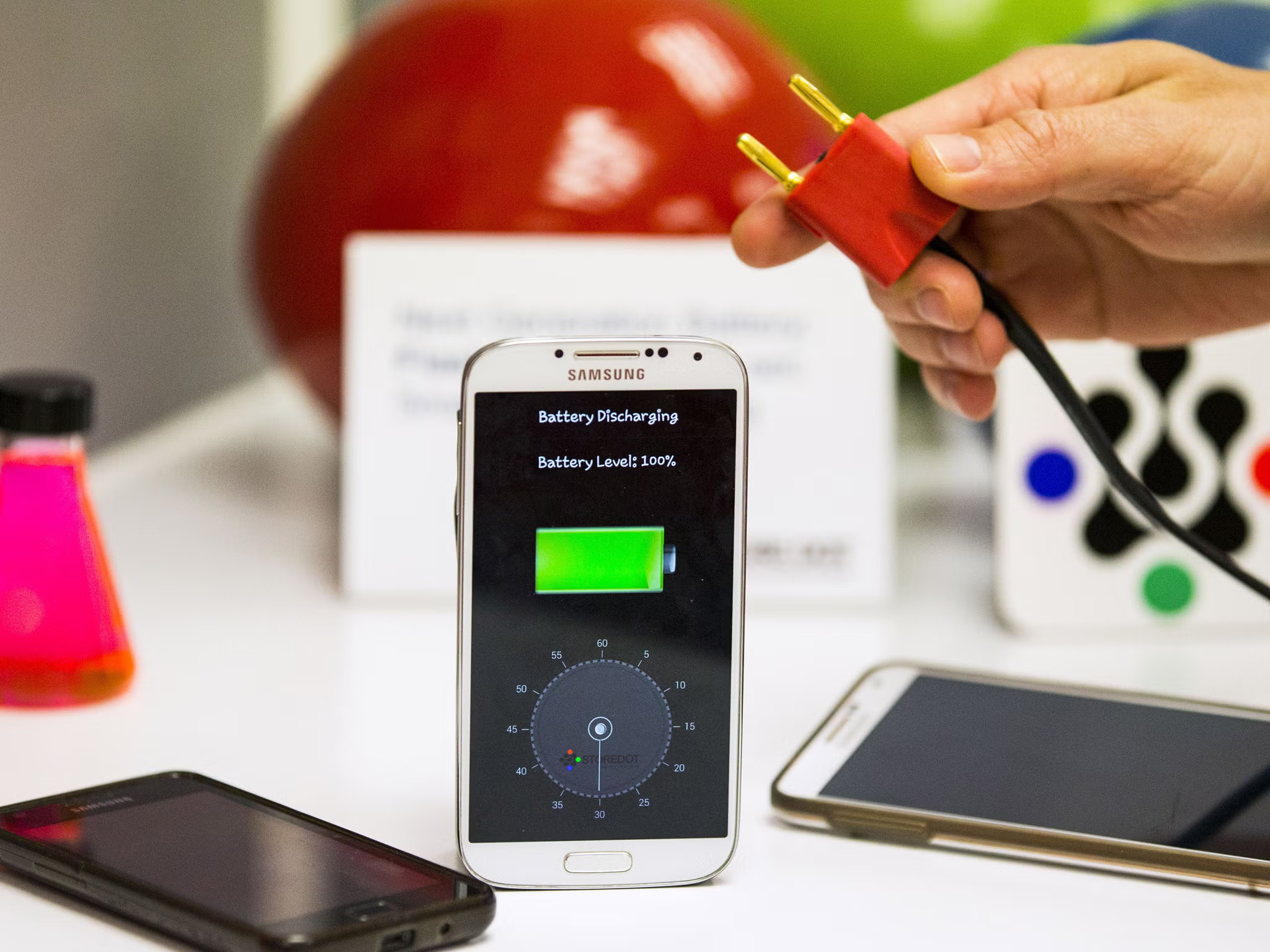

Flinders University researchers have developed an aqueous zinc-iodine battery that combines rapid charging with a reported lifespan of more than 60,000 cycles.
SYDNEY: Scientists at Flinders University in Australia have developed a zinc-iodine battery that can be fully charged in as little as three minutes while operating for more than 60,000 charge-discharge cycles under laboratory testing.
The research, published in Angewandte Chemie International Edition, focuses on aqueous zinc-iodine batteries, which use a water-based electrolyte. Researchers say the technology could offer a safer and more sustainable alternative to lithium-ion batteries, particularly for large-scale energy storage.
The battery’s performance is linked to a cyclodextrin-based polymer derived from starch. The material acts as a molecular cage that helps contain polyiodide compounds inside the battery and limits a problem known as the “shuttle effect,” which can contribute to performance loss.
According to Flinders University, the battery can operate at 1.3 to 1.4 volts and achieve a capacity of 200 mAh/g over 8,000 cycles when fully charged in seven minutes. Under a three-minute charging condition, it achieved 150 mAh/g for more than 60,000 cycles.
The water-based electrolyte is also a notable feature because aqueous battery systems are less prone to fire than conventional lithium-ion systems that use flammable electrolytes. Zinc and iodine could also provide an alternative to some materials used in established battery technologies.
Will iPhones and Samsung Galaxy phones get the new battery?
Despite the impressive laboratory results, consumers should not expect the technology to appear in iPhones or Samsung Galaxy smartphones anytime soon.
Flinders University describes the technology as a potential alternative for large-scale energy storage and says its research group is working with industry to establish a prototyping platform. The university has not announced a commercial smartphone battery based on the technology.
Moving from a laboratory cell to a compact smartphone battery would require further development, including improvements in manufacturing, energy density, size and integration with consumer electronics.
About The Author