

Pakistan signals zero tolerance on water security, linking regional peace to diplomacy, deterrence, and unresolved disputes with India.
ISLAMABAD: Pakistan has issued a strong warning that any attempt to weaponise water resources will be treated as an act of aggression, significantly raising the stakes in an already tense regional environment.
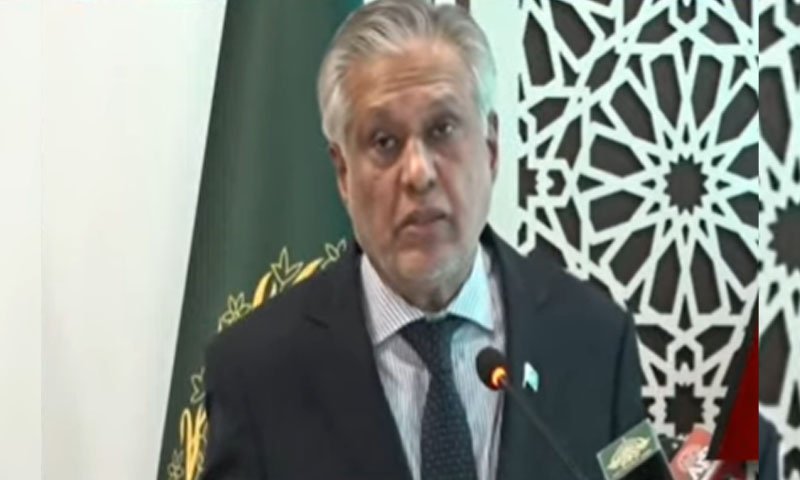
Deputy Prime Minister and Foreign Minister Ishaq Dar, in a detailed policy address, emphasized that Pakistan reserves the right to defend its national interests under international law. His remarks come amid growing concerns over water security and longstanding disputes linked to the Indus Waters Treaty.
Dar also revealed that Pakistan’s military had carried out a “precise and proportionate” operation targeting Indian military installations, asserting that the damage inflicted on Indian assets was “well documented.” He said developments in May underscored that sustainable regional stability can only be achieved through coordinated peace efforts rather than unilateral actions.
Highlighting broader geopolitical dynamics, the foreign minister criticized India’s response following the Pulwama attack in February 2019, calling it unlawful. He added that Pakistan had already taken note of Indian threats regarding the Indus Waters Treaty prior to April 2025, warning that any such aggression would trigger a firm response — a stance he said was demonstrated during Operation Marka-e-Haq.
Dar further cautioned that India’s reliance on what he described as extremist ideological narratives poses a continuing threat to peace and stability in South Asia.
On the diplomatic front, Pakistan reiterated its commitment to global peace as a responsible member of the United Nations. Dar stressed that lasting peace is essential for economic growth, even as the Kashmir dispute remains unresolved and continues to cast a shadow over regional relations.
He also pointed to Pakistan’s active role in international platforms, including the Shanghai Cooperation Organization, and highlighted deepening ties with China through the China-Pakistan Economic Corridor (CPEC), along with ongoing engagement with the European Union.
Turning to the Middle East, Dar reaffirmed Pakistan’s longstanding support for Nobel Jeruselam as the capital of a future Palestinian state, underscoring Islamabad’s consistent position on the issue.
In a notable diplomatic development, Dar disclosed Pakistan’s role in facilitating early April talks between the United States and Iran, stating that Islamabad helped bring both sides to the negotiating table after decades of strained relations. He described this effort as a significant contribution to regional diplomacy and stability.
The statement reflects Pakistan’s attempt to balance deterrence with diplomacy, sending a clear message that while it seeks peace, it remains prepared to respond decisively to any perceived threats to its sovereignty or critical resources.
About The Author