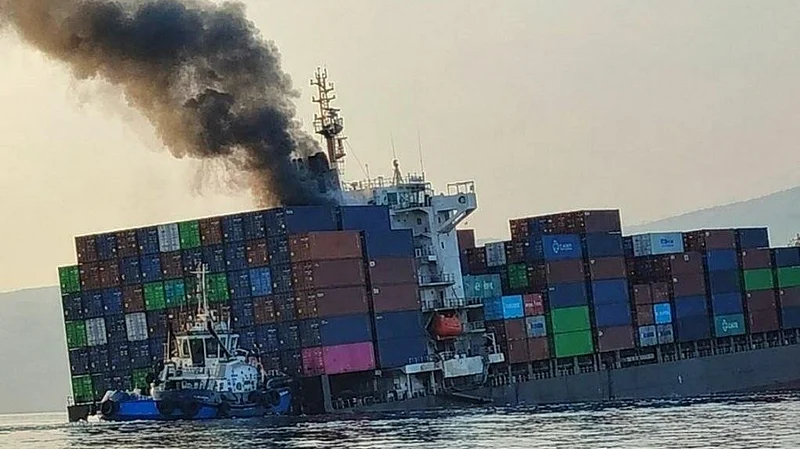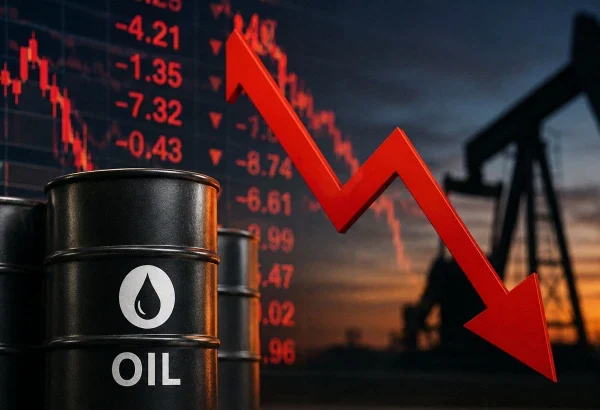

Global financial markets came under renewed pressure after escalating tensions between the United States and Iran sparked concerns about regional stability and the security of energy supplies. The latest developments pushed oil prices sharply higher and triggered volatility across major stock exchanges, highlighting the far-reaching economic consequences of geopolitical conflicts in the Middle East.
According to international market reports, crude oil prices surged following recent missile exchanges between Washington and Tehran. Brent crude climbed close to $98 per barrel, while West Texas Intermediate (WTI) traded near $95 per barrel. The sharp increase reflects growing fears that any further escalation could disrupt oil production or shipping routes in one of the world’s most important energy-producing regions.
Market analysts noted that investors are closely watching developments in the Gulf region, where a significant portion of global oil exports passes through key maritime routes. Concerns over supply disruptions have increased demand for crude oil, driving prices higher and raising inflation concerns for economies already grappling with elevated energy costs.
The geopolitical uncertainty also weighed heavily on equity markets. In Pakistan, the benchmark KSE-100 Index ended the trading session sharply lower, shedding 831 points to close at 170,190 points as investors adopted a cautious approach amid rising global risks.
Several major international stock markets also recorded losses. Exchanges in Germany, France, the United Kingdom, Hong Kong, and India faced selling pressure as investors shifted toward safer assets. However, Japan’s Nikkei Index bucked the trend, gaining more than two percent and outperforming other regional markets.
Financial experts warn that continued deterioration in relations between the United States and Iran could fuel further volatility in both energy and financial markets. Higher oil prices could increase transportation and manufacturing costs worldwide, potentially slowing economic growth and complicating efforts by central banks to control inflation.
As the situation continues to evolve, global investors, policymakers, and energy traders remain focused on developments between Washington and Tehran, recognizing that any major escalation could have significant consequences for oil markets, international trade, and overall economic stability.
About The Author