
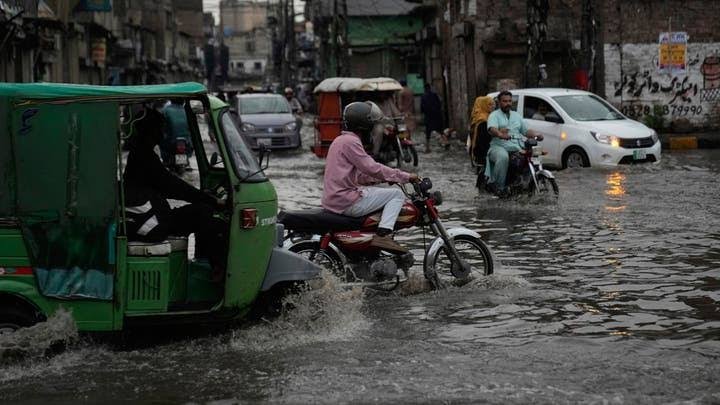

Pakistan’s monsoon death toll has climbed to 97 as fresh rain-related incidents claimed 11 lives in the past 24 hours, while authorities warned of more downpours, flash floods and urban flooding across several regions.
WEB DESK: Pakistan’s ongoing monsoon season has turned increasingly deadly, with at least 11 people losing their lives and 25 others suffering injuries in rain-related incidents during the past 24 hours, according to the National Disaster Management Authority (NDMA).
The latest fatalities have pushed the nationwide death toll to 97 since the monsoon season began on June 26, while 297 people have been injured across the country.
Punjab remained the worst-affected province during the latest reporting period, recording seven deaths and 20 injuries. Sindh reported two deaths and two injuries, while one person died in Khyber Pakhtunkhwa and another in Gilgit-Baltistan.
The NDMA said house collapses remained the leading cause of fatalities, accounting for more than half of the deaths reported in the last 24 hours. Several other casualties resulted from drowning incidents and lightning strikes as heavy rainfall continued to batter multiple regions.
The severe weather also damaged infrastructure and homes. Authorities reported that 22 houses were affected during the latest spell, including 17 partially damaged and five completely destroyed. Eight livestock also perished.
Since June 26, monsoon-related disasters have damaged 447 houses nationwide, with 338 partially damaged and 109 completely destroyed. Livestock losses have climbed to 269 animals.
Heavy rainfall and landslides have disrupted transportation, particularly in Khyber Pakhtunkhwa and Gilgit-Baltistan, where approximately 0.9 kilometers of roads were damaged. Restoration work is underway to reopen affected routes.
The Pakistan Meteorological Department (PMD) has forecast more rain, strong winds and thunderstorms across several parts of the country over the next 24 hours. The weather agency warned of possible flash floods in hill torrents of Dera Ghazi Khan and northeastern Balochistan, while urban flooding remains a concern in parts of southeastern Sindh.
Rain and thunderstorms are also expected in the upper catchments of major rivers, including Islamabad, Kashmir, Gilgit-Baltistan, Khyber Pakhtunkhwa, Punjab, Sindh and Balochistan.
Although the PMD said widespread flood-generating rainfall is not expected before July 28, another active monsoon system is likely to enter the country from July 29, potentially affecting upper river catchments and northern regions.
Relief operations continue across affected areas. The NDMA said 386 relief items were distributed during the past 24 hours, while rescue teams carried out five operations, saving eight people. Since the start of the monsoon season, authorities have completed 130 rescue operations and rescued 3,841 people nationwide.
Karachi likely to receive more rain
Karachi is expected to remain hot, humid and mostly cloudy over the next two days, with the Met Office forecasting light rain, drizzle and gusty winds in isolated areas.
Several districts across Sindh, including Tharparkar, Umerkot, Mirpurkhas, Badin, Sanghar, Matiari, Sukkur, Larkana, Hyderabad and Jamshoro, are also expected to receive thunderstorms and moderate to heavy rainfall in isolated locations.
The Met Office has warned that strong winds and lightning could damage vulnerable structures, while heavy downpours may trigger urban flooding in low-lying areas.
About The Author