

Growing student-led demonstrations over examination irregularities, unemployment, and governance concerns are highlighting the rising political influence of India’s Generation Z.
A growing wave of youth-led protests is reshaping India’s political landscape, with thousands of Generation Z students and young activists demanding reforms in education, employment, and governance. The demonstrations have placed increasing pressure on Prime Minister Narendra Modi’s government as frustration among young citizens continues to mount.
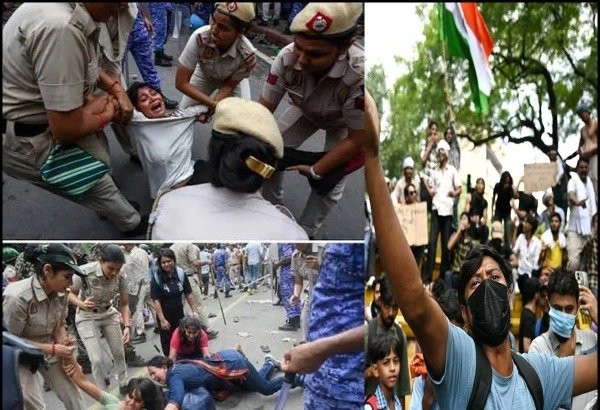
Large gatherings in New Delhi, particularly around Jantar Mantar, have drawn national attention after protesters attempted to march toward Parliament. Demonstrators say their campaign is driven by concerns over alleged irregularities in competitive examinations, including claims of paper leaks and weaknesses in the country’s examination system.
The protests intensified following clashes between demonstrators and police. Authorities used batons and tear gas to disperse crowds, according to reports, leaving several protesters injured. Opposition parties and civil rights organizations criticized the police response, arguing that excessive force was used against peaceful demonstrators.
The movement has gained additional visibility through the support of well-known social activist Sonam Wangchuk, whose participation has amplified public attention. Student leaders maintain that their primary objective is to protect the future of millions of young people who depend on a fair and transparent examination process.
Beyond examination concerns, protesters are demanding greater accountability from education authorities and stronger action against those responsible for alleged failures in the testing system. Many participants have also linked their concerns to rising unemployment, increasing education costs, and uncertainty surrounding future economic opportunities.
Political analysts note that India’s protests reflect a broader regional trend. In recent years, youth-led movements in Nepal, Sri Lanka, and Bangladesh have played significant roles in shaping political debates and public policy. Observers say India’s Generation Z is increasingly asserting its influence in similar ways.
Unlike many traditional political movements, Gen Z campaigns rely heavily on social media to organize demonstrations, mobilize supporters, and spread information quickly. This digital-first approach has enabled student groups to attract widespread public attention in a short period.
The emergence of Generation Z as a politically engaged force presents a significant challenge for governments across South Asia. Young citizens are becoming more vocal about transparency, fairness, governance, and economic opportunity, signaling a shift in how political participation is evolving across the region.
About The Author