
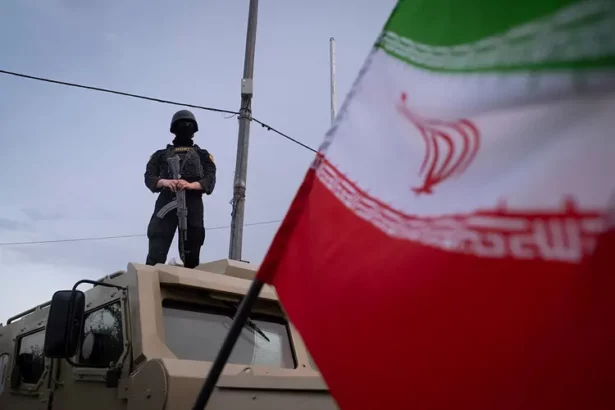

The Middle East moved dangerously closer to a wider regional conflict after Iran’s Islamic Revolutionary Guard Corps (IRGC) claimed responsibility for a missile and drone strike targeting a United States military base in Kuwait. The attack came in response to recent American military operations near Bandar Abbas in southern Iran, sharply escalating already fragile tensions across the Gulf region.
According to Iranian media reports, the IRGC said the operation was launched during the early hours of Thursday after US forces allegedly carried out airstrikes on facilities connected to Iranian drone operations near Bandar Abbas Airport. Iranian officials described the strike as a direct warning to Washington against further military action inside or near Iranian territory.
The IRGC warned that any future attacks on Iran would trigger a “stronger and more decisive response.” Iranian military authorities also alleged that the targeted American base in Kuwait had played a role in coordinating operations against Iranian military infrastructure near the strategically important Strait of Hormuz.
American officials defended their earlier military actions, claiming US forces intercepted four Iranian drones that posed an immediate threat to regional maritime security and international shipping routes. A US defence official said American forces also destroyed a ground control station that was allegedly preparing another drone launch near the Gulf waters.
Washington maintained that the operation was “limited and defensive,” insisting that the objective was to preserve the fragile ceasefire environment that has remained under pressure in recent months.
Kuwaiti authorities confirmed that their air defence systems responded to incoming missile and drone threats, although officials avoided directly identifying Iran as the source of the attack. Security measures were reportedly heightened across sensitive installations in the country following the incident.
The confrontation has intensified fears of a broader military conflict involving Gulf states, the United States and Iran. Regional observers warned that continued escalation around the Strait of Hormuz could destabilise global energy markets and threaten one of the world’s most critical oil shipping corridors.
Meanwhile, Israel reported increased security activity in northern areas after detecting hostile aerial threats linked to Iran-backed groups operating across the region. The development added further pressure to an already volatile security situation stretching from the Gulf to the eastern Mediterranean.
Global financial markets reacted immediately to the rising tensions. Oil prices climbed sharply amid fears that instability around the Strait of Hormuz could disrupt energy supplies and commercial shipping. Investors also shifted toward safer assets as uncertainty spread across international markets.
In another major development, the United States announced fresh sanctions targeting Iran’s Persian Gulf Strait Authority. The US Treasury accused the organisation of cooperating with the IRGC to pressure commercial shipping companies into paying illegal tolls for safe passage through the Strait of Hormuz.
American officials alleged that revenue generated through the shipping system was being redirected to support Iran’s military activities and regional operations. Washington also warned international companies and shipping operators that any cooperation with the sanctioned authority could expose them to severe financial restrictions and penalties.
The latest escalation has once again pushed the Gulf region to the edge of a potentially wider confrontation, while diplomatic efforts appear increasingly uncertain as tensions continue to rise between Tehran and Washington.
About The Author