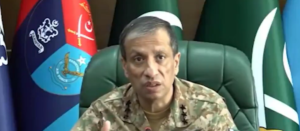

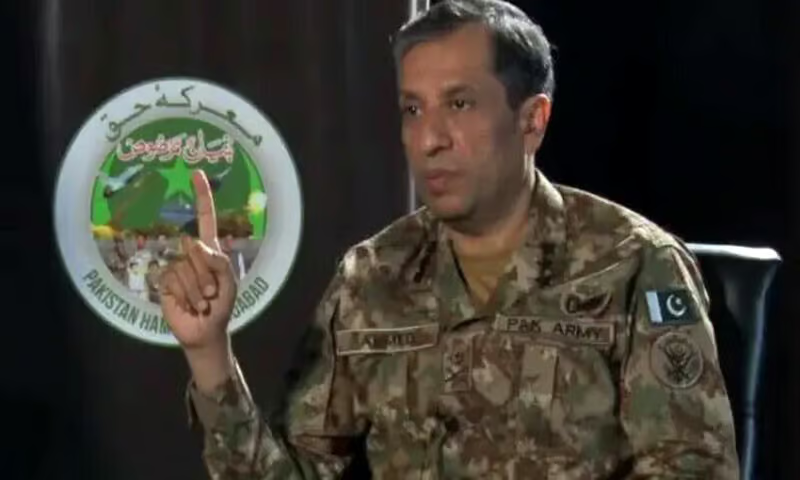

RAWALPINDI: Pakistan’s military on Sunday issued a strongly worded response to recent remarks made by the Indian Chief of Army Staff, accusing New Delhi of promoting “warmongering” and pushing South Asia toward another dangerous crisis between two nuclear-armed neighbours.
In a statement released by the Inter-Services Public Relations (ISPR), Pakistan rejected the Indian army chief’s comments suggesting that Pakistan should decide whether it wanted to remain “part of geography and history.” The military described the remarks as “provocative,” “delusional,” and reflective of a mindset driven by hostility toward Pakistan’s existence.
The ISPR said Pakistan was already “a country of consequence at global level,” highlighting its status as a declared nuclear power and an “indelible part” of South Asia’s geography and history. The statement argued that India’s leadership had failed to reconcile with the creation of Pakistan even after more than eight decades since partition.
Pakistan’s military further accused the Indian leadership of repeatedly pushing the region toward conflict through what it called a “hubristic, jingoistic and myopic mindset.” It warned that threatening a sovereign nuclear state with elimination from geography was not strategic signalling but an indication of “bankruptcy of cognitive capacities, madness and warmongering.”
The statement stressed that any attempt to erase Pakistan geographically would have “mutual and comprehensive” consequences, underlining the dangers of irresponsible rhetoric between nuclear states. According to the ISPR, responsible countries possessing nuclear weapons should demonstrate restraint, maturity and strategic sobriety instead of promoting narratives based on “civilisational supremacy or national erasure.”
The military media wing also accused India of being a source of instability in the region, alleging involvement in state-sponsored terrorism, transnational assassinations and global disinformation campaigns. It claimed India’s aggressive posture stemmed from frustration over its inability to undermine Pakistan, particularly after what it referred to as “Marka-e-Haq.”
Pakistan warned that any future attempt to target the country could trigger consequences extending beyond geographical boundaries and carrying serious strategic and political implications for the wider region.
The statement concluded by urging India to accept Pakistan’s regional significance and adopt peaceful coexistence instead of confrontation, cautioning that another crisis or war in South Asia would have devastating consequences not only for both countries but for the broader international community as well.
About The Author