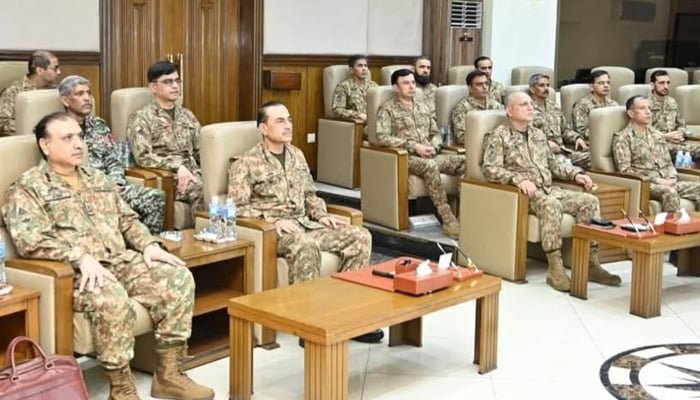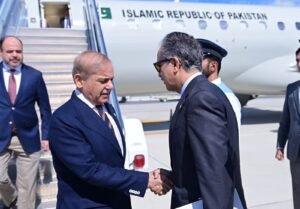

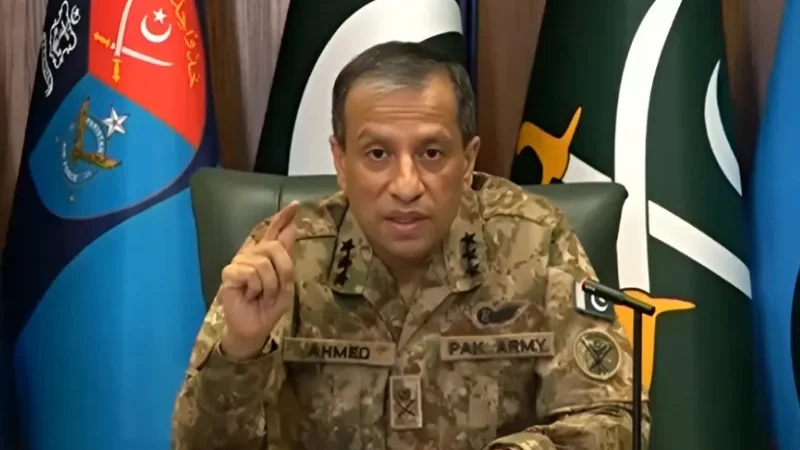

DG ISPR Lt. Gen. Ahmed Sharif Chaudhry says the Makkah Defence Alliance is focused on collective deterrence, mutual protection and regional stability.
ISLAMABAD: Pakistan’s newly formed defence partnership with Saudi Arabia and Turkiye is strictly defensive and has no regional expansionist ambitions, Director General Inter-Services Public Relations (ISPR) Lt. Gen. Ahmed Sharif Chaudhry has said.
Speaking in an interview with Al Arabiya English’s Global News Today, the military spokesperson described the Makkah Defence Alliance as a framework for collective deterrence and defence. He said the arrangement was not intended to compete with existing alliances or the international relationships maintained by its three members.
The agreement between Pakistan, Saudi Arabia and Turkiye was signed in Makkah on Aug. 7. Under the publicly announced arrangement, an attack on one member would be treated as an attack on all three countries.
Asked whether the pact represented a broader strategic alliance, Chaudhry said its character was reflected in its name and purpose.
“It is defensive. There’s nothing aggressive. There are no regional aspirations. It is collective deterrence,” he said.
He said the agreement was also complementary because Pakistan, Saudi Arabia and Turkiye each maintain independent relationships with other countries and international blocs.
The interviewer also asked about the mutual defence obligation and how Pakistan would respond if another member came under attack. Chaudhry said the publicly released text outlined the commitment, while the operational details of any military response would remain classified.
He added that countries generally do not publicly disclose specific mechanisms for implementing defensive agreements during a crisis.
Pact not aimed at China
Addressing questions about Pakistan’s relationship with China, the DG ISPR said the new defence arrangement should not be viewed as competing with Islamabad-Beijing ties.
He said Pakistan’s relations with Saudi Arabia and Turkiye were longstanding and that China understood the historical nature of those relationships.
According to Chaudhry, all three countries participating in the new arrangement also have strong relations with China. He said this supported Pakistan’s position that the alliance was complementary rather than directed against another country.
He further identified regional stability and peace as central objectives of the agreement.
Alliance could potentially expand
The possibility of expanding the alliance has drawn attention since its formation, particularly after Turkiye suggested that Egypt could potentially join. Cairo, however, has not confirmed any decision to become part of the arrangement.
Chaudhry said the agreement was not specifically established as an alliance limited to the Muslim world.
“It is not a club that is being made for only Muslim countries,” he said, adding that any potential expansion would ultimately be decided by the leadership of Pakistan, Saudi Arabia and Turkiye.
He said other countries could potentially be included if they shared principles of non-aggression, non-interference, regional peace and collective deterrence.
Pakistan initially assumed responsibility for the alliance’s secretariat for three years after its inaugural meeting in Istanbul on Aug. 31.
However, Pakistan’s Foreign Office has indicated that expansion is not currently under consideration. Officials have said the three founding members first need to consolidate the new organisation before considering additional partners.
About The Author