

A government inquiry identifies a likely electrical fault near AC Unit 2 and highlights major failures in fire detection, evacuation, emergency response and safety oversight.
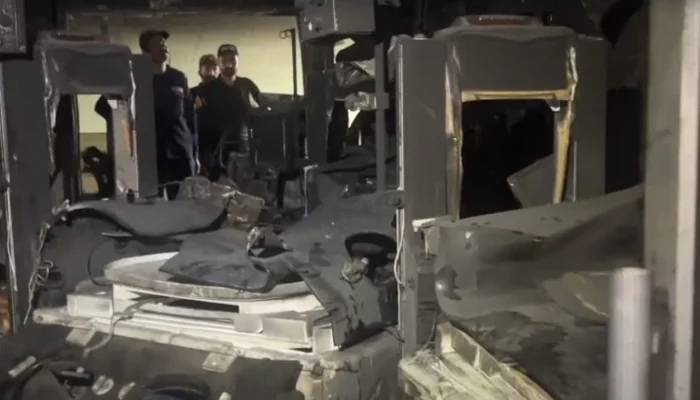
ISLAMABAD: The inquiry report into the Aug. 26 fire at the MCH Nursery of Pakistan Institute of Medical Sciences (PIMS) has identified a likely electrical fault near AC Unit 2 as the most probable source of the blaze and found multiple systemic safety failures that contributed to its devastating consequences.
The report, issued on the orders of Prime Minister Muhammad Shehbaz Sharif, said 14 of the 15 newborn babies receiving treatment in the nursery died, while one survived.
According to the inquiry, the nursery had a capacity of 10 beds but 15 critically ill newborns were present when the fire broke out. Several babies were dependent on oxygen or respiratory support, making rapid evacuation extremely difficult.
Technical evidence from the National Forensic Agency indicated that the most probable point of origin was an electrical cable associated with AC Unit 2, located near AC Unit 1. The report said localized electrical heating, excessive current, a high-resistance connection or another local electrical fault may have damaged the cable insulation and ignited nearby combustible material.
The evidence did not support arson, multiple points of ignition, an external electrical fault attributed to IESCO or the possibility of oxygen being released before the fire. The inquiry also found no evidence that an incubator or warmer was the source of the blaze.
CCTV footage showed that the emergency developed extremely rapidly. The fire was clearly visible by approximately 6:38:15 a.m., while heavy smoke had obscured the CCTV view by about 6:39:15 a.m.
The report said Charge Nurse Nasreen Akhtar, security guard Maria Saleem and staff nurse Razia Noreen acted within moments to rescue the babies. Razia Noreen rescued one newborn and attempted to re-enter the nursery. Dr. Muhammad Abdul Rahman was also present at the scene.
The inquiry rejected the general allegation that frontline staff abandoned the newborns, saying several personnel acted promptly and courageously under extremely dangerous conditions.
However, the report identified serious shortcomings in the broader emergency response. Records showed external notification at 6:54 a.m., dispatch at 6:55 a.m. and operational arrival at 7:01 a.m. The committee described the gap between the fire becoming apparent and external assistance being activated as unacceptable.
The inquiry found no evidence of an approved and regularly practiced neonatal evacuation procedure. It also found no confirmed automatic smoke detection, alarm or sprinkler system in the affected area.
The committee said PIMS had failed to convert previously identified safety risks into a comprehensive corrective program. Earlier correspondence from the Capital Development Authority and recommendations by the Federal Ombudsman had highlighted deficiencies, while PIMS acknowledged outdated fire-safety infrastructure in 2025.
The report also referred to a July 6, 2026, fire at the nursing hostel, where deficiencies involving early fire detection, alarms, electrical inspection, evacuation, firefighting equipment, drills and emergency planning had already been identified.
The committee concluded that systemic and institutional failures were established, with primary institutional responsibility resting with PIMS and senior management. It said individual criminal responsibility would require further investigation based on applicable rules and available evidence.
The committee recommended immediate fire-safety and electrical audits, effective detection and alarm systems, firefighting arrangements, safe evacuation measures, dedicated neonatal evacuation protocols, realistic fire drills and stronger regulatory oversight.
The inquiry was conducted under a 52-point framework covering prevention, preparedness, detection, notification, evacuation, rescue, oversight and accountability.
About The Author