
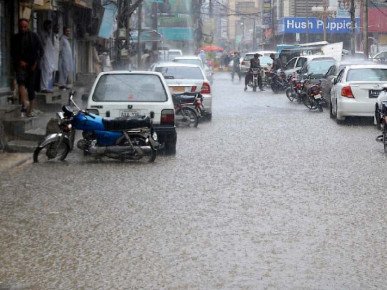

Rawalpindi and Islamabad remain on high alert after heavy monsoon rain inundated low-lying areas, while authorities intensified drainage operations amid a rising Nala Lai water level.
Heavy monsoon rain battered Rawalpindi and Islamabad for a second consecutive day on Tuesday, inundating several low-lying areas and disrupting routine life as authorities intensified emergency measures to deal with possible urban flooding.
According to Water and Sanitation Agency (WASA) Managing Director Shamsabad recorded the highest rainfall in Rawalpindi, receiving 116 millimetres. WASA declared a rain emergency and cancelled the leave of field staff to ensure teams remained available for immediate response.
Heavy machinery has been deployed at vulnerable locations, including Liaquat Bagh, Committee Chowk Underpass, Murree Road, Dhok Khuba, Circular Road and Sadiqabad. Drainage teams are working to remove accumulated rainwater and keep major roads and underpasses accessible.
The water level in Nala Lai reached 10.5 feet at Katarian and 8.5 feet at Gowalmandi, prompting authorities to maintain close surveillance. Officials are particularly concerned that additional rainfall could further raise water levels and increase the risk of flooding in vulnerable parts of Rawalpindi.
Meanwhile, Lahore is also experiencing the impact of the ongoing monsoon spell. The city recorded temperatures around 31°C, with the maximum expected to reach 35°C. Humidity was reported at 75%, while winds were blowing at around 6 kilometres per hour.
The Meteorological Department has forecast heavy rain in Lahore and other parts of Punjab through the ongoing monsoon spell, with rainfall expected in several districts until Aug. 21. Officials have warned residents about possible water accumulation in low-lying areas and urban flooding.
WASA Lahore has been placed on high alert on the directives of Punjab Chief Minister Maryam Nawaz Sharif. Officials have been instructed to keep disposal stations operational, deploy pumps and ensure drainage equipment remains ready.
WASA authorities have also directed teams to use generators at disposal stations affected by power outages. Screens at pumping stations are being cleaned regularly to prevent blockages, while field officers are monitoring drainage operations across the city.
The latest WASA Lahore rainfall figures included 21 millimetres at the Nishtar Town Director Office, 2.2mm in Kahna and 25.4mm at the Nishtar Town Disposal Station.
About The Author