

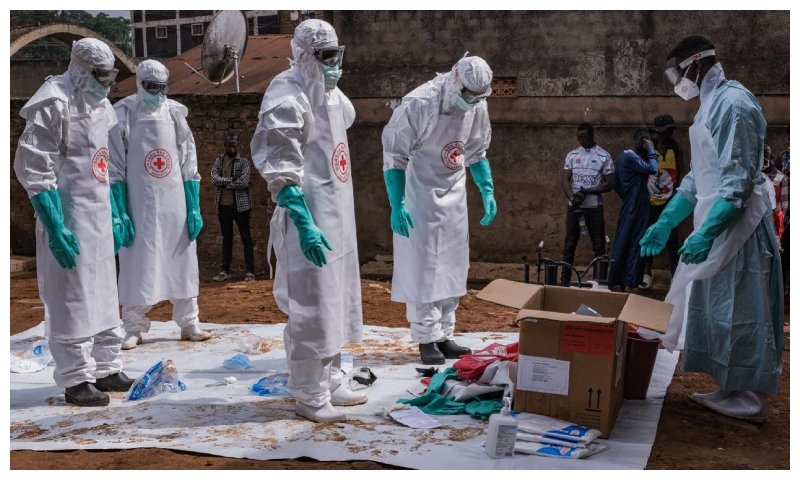

KAMPALA: Health authorities in Central Africa are racing to contain a growing Ebola outbreak after confirmed cases in the Democratic Republic of Congo and Uganda rose to 263, while the death toll reached 43, according to the Africa Centres for Disease Control and Prevention (Africa CDC).
The latest figures have raised concerns among regional and international health agencies, with officials warning that the outbreak is spreading faster than current response efforts. More than 1,100 suspected cases are also under investigation, highlighting the scale of the challenge facing health workers on the ground.
Africa CDC Director-General Jean Kaseya said the outbreak involves the rare Bundibugyo strain of the Ebola virus. He stressed the urgent need for countries to activate national emergency systems and strengthen pandemic preparedness measures to prevent further transmission.
Kaseya warned that the current response remains insufficient compared to the speed at which the virus is spreading. He emphasized that while international partners play a crucial role in supporting containment efforts, their assistance is most effective when aligned with strategies developed by African governments and public health institutions.
The outbreak marks the 17th recorded Ebola epidemic in the Democratic Republic of the Congo and is considered the country’s third-largest outbreak since the virus was first identified more than five decades ago. Health experts say the prolonged undetected spread of the disease has complicated containment efforts.
Medical teams and humanitarian organizations have also reported shortages of essential protective equipment, including masks and other supplies needed to safely manage patients and prevent infections among frontline workers.
The World Health Organization has declared the Ebola outbreak affecting Congo and Uganda a public health emergency of international concern, underscoring the potential regional and global risks posed by the rapidly evolving situation.
Public health officials continue to urge vigilance, enhanced surveillance, and community cooperation as authorities work to trace contacts, isolate infections, and prevent the outbreak from spreading further across the region.
About The Author