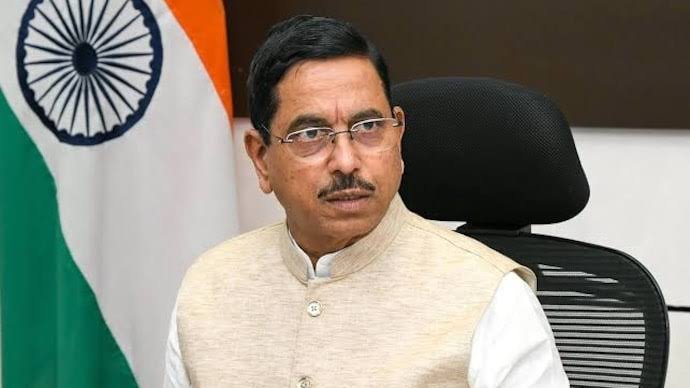

Pralhad Joshi has been entrusted with India’s Education Ministry following the resignation of Dharmendra Pradhan, as the government faces growing pressure over examination reforms and student concerns.
WEB DESK: India has appointed Union Minister for Food and Consumer Affairs Pralhad Joshi as the country’s new education minister after President Droupadi Murmu accepted the resignation of Dharmendra Pradhan, according to an official government notification.
Joshi will continue to oversee his existing portfolio while assuming additional responsibility for the Ministry of Education. His appointment comes at a critical time, with the government under increasing scrutiny over examination-related controversies and student demands for greater transparency.
Speaking to reporters after taking charge, Joshi said he accepted the responsibility with humility and a strong sense of duty. He thanked Prime Minister Narendra Modi for the confidence placed in him and highlighted the government’s achievements during its 12 years in office, including reforms in the education sector.
The newly appointed minister also praised his predecessor, Dharmendra Pradhan, for leading the implementation of India’s National Education Policy (NEP). Joshi said Pradhan’s tenure saw several important initiatives that helped modernize the country’s education system over the past several years.
Pradhan’s resignation followed weeks of nationwide student protests triggered by allegations of examination paper leaks and irregularities. Demonstrators demanded accountability, stricter safeguards for public examinations and reforms to restore confidence in the education system.
The protests, largely led by young people and amplified through social media campaigns, intensified pressure on the government. Pradhan stepped down on the 35th day of the demonstrations, with protesters describing his resignation as one of their key demands.
Joshi now assumes leadership of the ministry at a pivotal moment. Alongside ensuring continuity in ongoing education programmes and the implementation of existing policies, he is expected to address public concerns over examination procedures, transparency and institutional accountability.
About The Author