
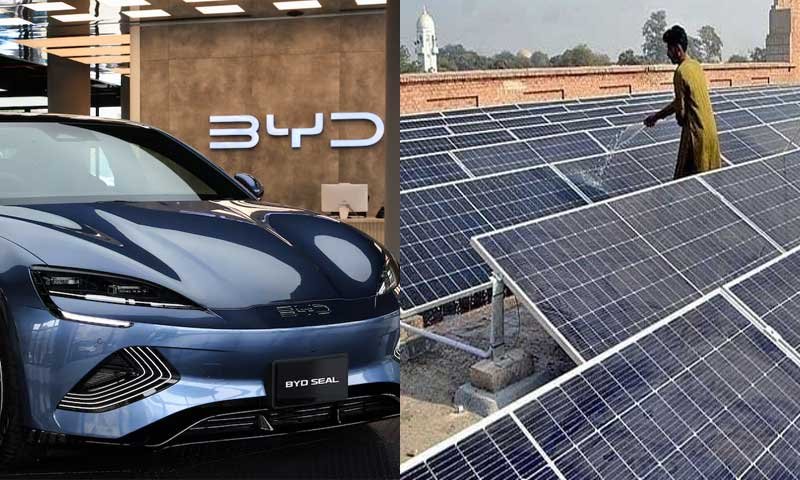

ISLAMABAD: Consumers and businesses could face higher costs in the coming fiscal year as the federal government reviews existing tax exemptions on electric vehicles (EVs), hybrid cars and solar panels ahead of the 2026-27 budget.
According to sources, authorities are considering imposing the standard 18 per cent sales tax on electric and hybrid vehicles, a move that could significantly increase prices across Pakistan’s growing clean-energy transportation sector. The review comes as the government seeks to broaden its tax base and reduce exemptions under ongoing fiscal reforms.
Sources said the International Monetary Fund (IMF) has reportedly not supported Pakistan’s request to continue current tax concessions for electric and hybrid vehicles. As a result, policymakers are evaluating whether these incentives should be withdrawn in the upcoming budget.
Under the proposed changes, the sales tax on electric vehicles could rise sharply from the current rate of around 1 per cent to 18 per cent. Hybrid vehicles, which have benefited from a reduced sales tax of approximately 8 per cent, may also be brought under the standard taxation framework.
The government is also reviewing tax incentives for the renewable energy sector. Sales tax on solar panels and related equipment, currently around 10 per cent, could be increased to 18 per cent as part of efforts to rationalize tax exemptions and boost revenue collection.
Industry stakeholders fear the proposed measures could slow the adoption of environmentally friendly technologies by increasing upfront costs for consumers. Higher taxes on EVs, hybrid vehicles and solar systems may affect demand at a time when Pakistan has been encouraging investment in clean energy and fuel-efficient transportation.
Import data cited by sources shows that approximately 45,000 vehicles were imported during the previous fiscal year. Imports are expected to decline to around 40,000 units in the current fiscal year, while nearly 38,000 vehicles were imported between July and April of fiscal year 2025-26.
Officials are continuing a comprehensive review of tax exemptions and concessions across multiple sectors. Additional fiscal measures may be included in the final budget proposals, which are expected to outline the government’s broader strategy for revenue generation and economic stabilization in the new fiscal year.
About The Author