
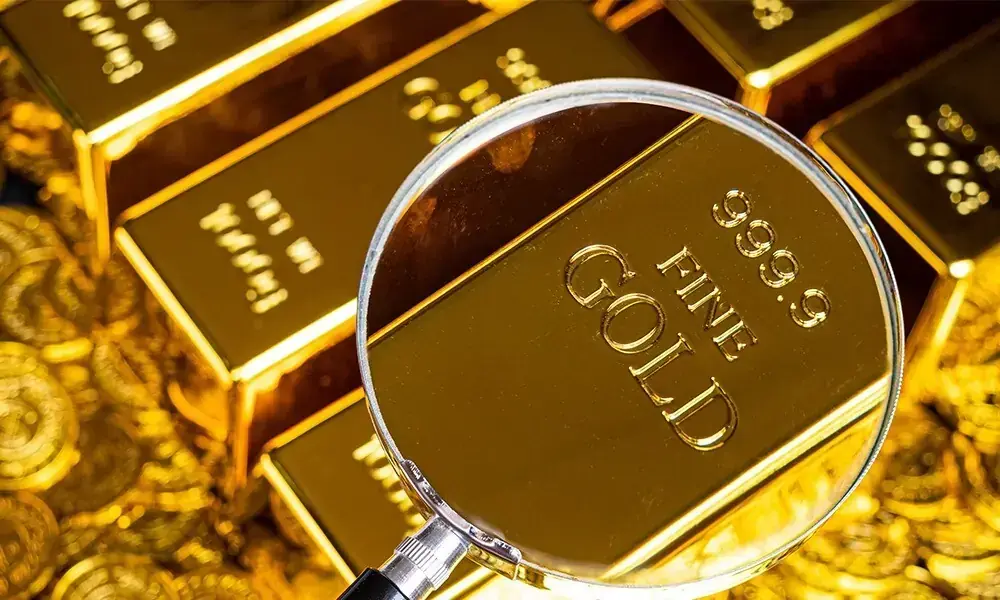

Local gold prices rebounded sharply after Saturday’s decline as geopolitical tensions, inflation concerns, and expectations surrounding key US economic data continued to shape investor sentiment.
KARACHI: Gold prices in Pakistan moved higher on Monday, reversing the sharp decline recorded over the weekend, even as international bullion prices edged lower. Market experts linked the local increase to persistent geopolitical tensions in the Middle East, inflation concerns, and cautious investor positioning ahead of crucial US economic data expected later this week.
According to the All-Pakistan Gems and Jewellers Sarafa Association, the price of 24-karat gold increased by Rs1,700 per tola, taking it to Rs428,436. Meanwhile, the price of 10 grams of gold rose by Rs1,457 to Rs367,314. The recovery followed Saturday’s decline of Rs3,700 per tola, when gold settled at Rs426,736.
In the international market, gold remained under slight pressure. Spot gold slipped 0.1% to $4,037.01 per ounce, while US gold futures for August delivery eased 0.3% to $4,035.80 per ounce. Despite the modest decline, analysts said investors continue to seek safe-haven assets due to geopolitical uncertainty and expectations surrounding upcoming US economic indicators.
Silver prices also strengthened in Pakistan, with the price rising Rs54 per tola to Rs6,291, reflecting sustained demand for precious metals in the domestic market.
Adnan Agar, Director at Interactive Commodities, said international gold prices fluctuated during trading, reaching a high of $4,080 per ounce before falling to $4,019 and later stabilising near $4,038. He noted that bullion has remained within a broad trading range of $3,950 to $4,250 per ounce since June but expects a breakout within the next one or two weeks.
Market participants are closely watching upcoming US labour market data, which could influence the Federal Reserve’s interest rate decisions. Higher interest rates generally reduce the attractiveness of non-yielding assets such as gold, while expectations of rate cuts typically support bullion prices.
Analysts are also monitoring reports that South Korea’s central bank plans to purchase gold from domestic producers, a move that could strengthen global demand in the coming months.
Meanwhile, oil prices remain volatile after Brent crude surged more than 20% last month due to Middle East tensions, increasing concerns that higher energy costs could push inflation higher worldwide.
About The Author