
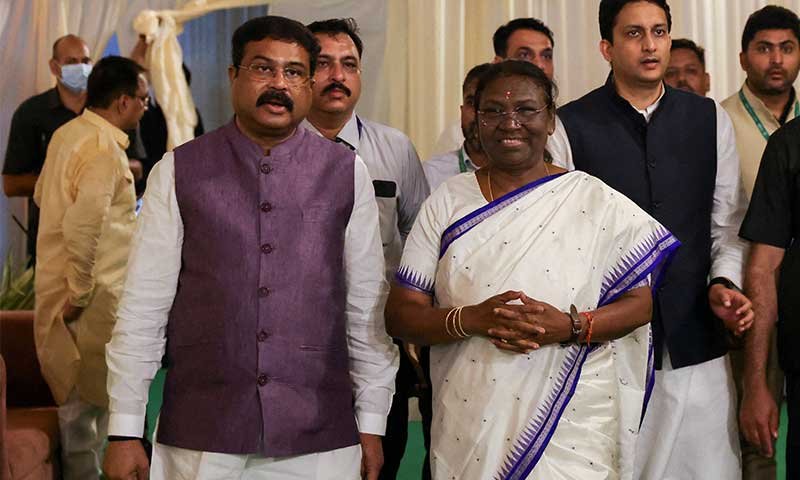

India’s youth-led protest movement claimed a major victory after Education Minister Dharmendra Pradhan resigned, but organizers vowed to continue demonstrations until victims’ families receive compensation and those responsible for the police crackdown are held accountable.
NEW DELHI: India’s Education Minister Dharmendra Pradhan resigned on Saturday amid mounting nationwide protests over alleged examination paper leaks, marking a significant victory for a youth-led movement that has challenged Prime Minister Narendra Modi’s government. However, protest leaders made it clear that demonstrations will continue until additional demands are fulfilled.
Leaders of the Cockroach Janata Party (CJP), which has spearheaded the protests, welcomed Pradhan’s resignation but insisted their campaign is far from over. CJP leader Abhijeet Dipke said the group now seeks compensation of one crore rupees for the families of students who died by suicide and action against police officers involved in the recent crackdown on demonstrators.
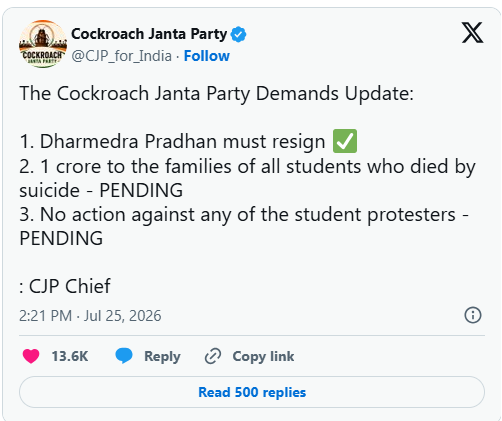
“This is democracy. He has resigned, but we have two more demands,” Dipke said, adding that the movement would not end until justice is delivered.
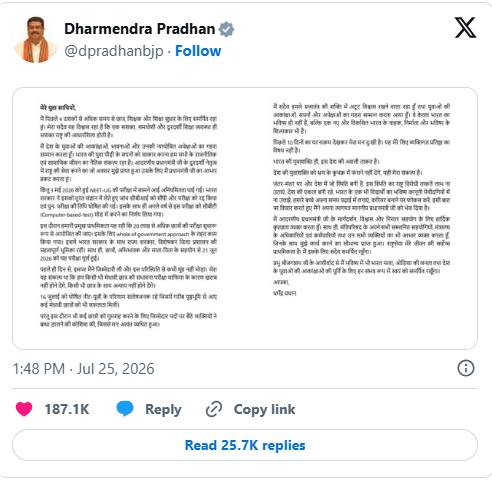
Pradhan announced his resignation in a post on X while police were dispersing protesters with tear gas near New Delhi’s Jantar Mantar. In his statement, the minister said he stepped down to prevent anti-national elements from exploiting the situation and expressed respect for the aspirations and legitimate expectations of the country’s youth.
The announcement sparked celebrations among thousands of protesters gathered in central Delhi. Authorities, however, continued strict security measures, including internet restrictions and limited access to several metro stations in an effort to contain the demonstrations.
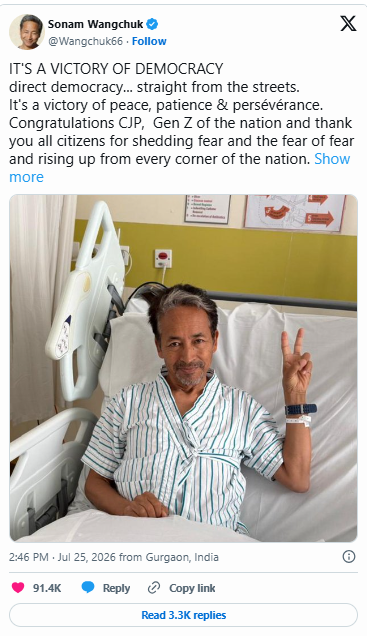
Activist Sonam Wangchuk, who recently ended a 26-day hunger strike, congratulated protesters from his hospital bed, calling the resignation an important milestone in the movement.
The unrest began after allegations surfaced that question papers for major entrance examinations had been leaked, forcing millions of candidates to retake tests. The controversy intensified public anger over unemployment, corruption, and concerns about transparency in India’s education system.
Earlier negotiations between government ministers and CJP representatives failed to resolve the crisis. Protest leaders warned that demonstrations would continue to expand unless broader reforms are introduced alongside accountability for those responsible for the examination scandal and the police response.
About The Author