
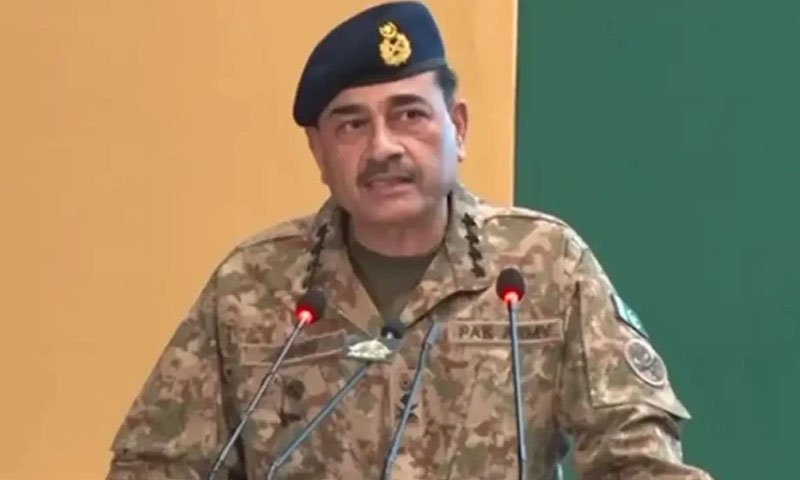

ISLAMABAD: Pakistan’s Army Chief, Syed Asim Munir, is expected to arrive in Tehran on Thursday for high-level discussions linked to ongoing mediation efforts between the United States and Iran, according to Iranian state media reports.
The reported visit comes at a highly sensitive moment as tensions between Washington and Tehran continue to escalate following weeks of fragile diplomacy, military threats and growing fears of a wider regional conflict.
Iran’s state-run ISNA news agency, quoting officials, said Pakistan has remained actively engaged as a communication channel between both sides, with multiple diplomatic contacts continuing behind the scenes. Pakistani Interior Minister Mohsin Naqvi is already in Tehran as part of the ongoing diplomatic engagement.
The development coincides with renewed pressure from US President Donald Trump, who signaled that Washington may allow only limited time for negotiations before considering further military action.
Speaking to reporters, Trump said the United States was waiting for “the right answers” from Tehran but warned that the situation would not remain open indefinitely.
“It could be a few days, but it could go very quickly,” Trump said, reiterating that Washington would never allow Iran to acquire nuclear weapons.
In another strongly worded statement, Trump warned: “We’re in the final stages of Iran. Either have a deal or we’re going to do some things that are a little bit nasty.”
Iranian Foreign Ministry spokesperson Esmaeil Baghaei confirmed Tehran had received the latest US position and was reviewing it carefully.
“We have received US views and are reviewing them,” Baghaei said, according to Iranian state media.
Despite diplomatic contacts, the situation remains volatile. Iran’s Islamic Revolutionary Guard Corps warned that any renewed attack on Iranian territory could trigger a much broader regional conflict.
“If aggression against Iran is repeated, the promised regional war will extend beyond the region this time,” the IRGC said in a statement.
Iran has reportedly submitted a revised proposal to Washington this week that includes demands for sanctions relief, the release of frozen Iranian assets and security arrangements related to the strategically critical Strait of Hormuz.
The Strait of Hormuz remains one of the world’s most important energy shipping corridors, and tensions surrounding the route have already disrupted maritime traffic and unsettled global oil markets.
Iran’s proposal for a “controlled maritime zone” requiring authorization for vessel transit has reportedly been rejected by Washington, which argues that no restrictions or transit fees should be imposed on international passage through the waterway.
Shipping activity through the strait has partially recovered in recent weeks but remains below normal pre-conflict levels, when approximately 140 vessels crossed the corridor daily.
The broader regional conflict has already caused significant casualties across Iran, Israel and Lebanon, intensifying fears over Middle East stability and global energy security.
While months of confrontation have weakened diplomatic trust, Iran continues to retain its missile capabilities and nuclear material stockpile, complicating efforts toward a comprehensive settlement.
Trump and Israeli Prime Minister Benjamin Netanyahu have repeatedly stated that curbing Iran’s regional influence and dismantling its nuclear program remain central objectives, though negotiations have yet to produce a final breakthrough.
Pakistan’s growing diplomatic role now places Islamabad at the center of one of the world’s most sensitive geopolitical crises, with regional and global powers closely watching whether fresh mediation efforts can prevent another dangerous escalation in the Middle East.
About The Author