
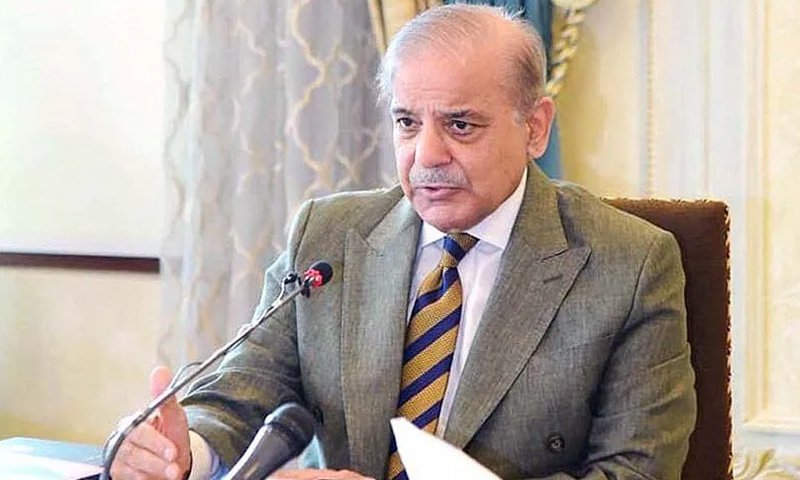

Prime Minister Shehbaz Sharif arrived in Gilgit-Baltistan on a one-day visit where he is expected to launch multiple development initiatives, including renewable energy projects, Safe City systems, youth loan schemes, and new Danesh Schools.
Prime Minister Shehbaz Sharif arrived in Gilgit on Thursday for a one-day official visit to Gilgit-Baltistan, bringing with him a package of development initiatives aimed at boosting education, renewable energy, and youth empowerment in the region.
Upon his arrival in Gilgit, the prime minister was received by Governor Syed Mehdi Shah and caretaker Chief Minister Justice (R) Yar Muhammad.
A high-level federal delegation accompanied the prime minister, including Federal Ministers Ahsan Iqbal, Sardar Owais Ahmed Khan Leghari, Attaullah Tarar, Amir Muqam, Abdul Aleem Khan and Khalid Maqbool Siddiqui. Adviser to the Prime Minister Rana Sanaullah and Special Assistant Talha Burki were also part of the delegation.
During separate meetings with Governor Mehdi Shah and caretaker Chief Minister Yar Muhammad, the prime minister reviewed the progress of ongoing development projects in Gilgit-Baltistan. Discussions also focused on the overall law and order situation and other administrative matters related to the region.
Officials said Prime Minister Shehbaz Sharif is scheduled to inaugurate several major initiatives for Gilgit-Baltistan, including renewable energy projects based on solar power, the Safe City project, laptop distribution schemes, and youth business and agriculture loan programs.
In a major boost for the education sector, the prime minister will also lay the foundation stones for four new Danesh Schools in Gilgit-Baltistan. The move is being viewed as part of the federal government’s broader effort to improve educational opportunities and infrastructure in remote areas of Pakistan.
The visit comes at a time when the federal government is increasingly focusing on regional connectivity, sustainable development, and youth-centered economic programs in northern Pakistan, particularly in strategically important Gilgit-Baltistan.
About The Author