

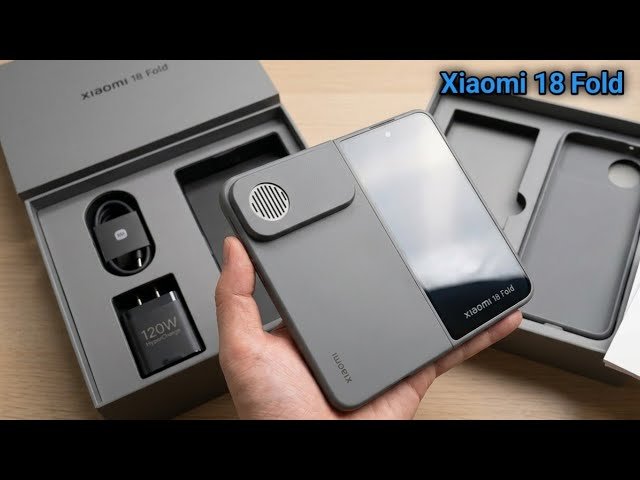

Xiaomi’s upcoming foldable could pair CXMT’s new LPDDR6 memory with the Xring O3 processor for faster performance and improved power efficiency.
Xiaomi 18 Fold Set to Debut CXMT’s LPDDR6 Memory
Xiaomi is preparing to launch a new foldable smartphone that could become the first consumer device to use Chinese memory maker CXMT’s latest LPDDR6 technology.
CXMT has confirmed that its LPDDR6 memory has entered mass production. The company announced the development on Weibo and said Xiaomi will use the new memory in an upcoming device. Xiaomi founder Lei Jun has also confirmed the partnership.
The Xiaomi 18 Fold is expected to launch in September and is reportedly set to combine CXMT’s LPDDR6 memory with Xiaomi’s latest flagship Xring O3 processor. The same processor and memory combination is also expected to feature in the Xiaomi Pad 9 Pro Max.
LPDDR6 succeeds LPDDR5 and LPDDR5X and is designed to deliver higher memory bandwidth while improving power efficiency. CXMT’s implementation is expected to reach 10,667 MT/s when paired with the Xring O3, with reported speeds of up to 12,800 MT/s. The full LPDDR6 standard supports data rates of up to 14,400 MT/s.
The new memory also uses a wider 24-bit interface, potentially allowing greater data throughput than LPDDR5X. Higher bandwidth could benefit demanding smartphone workloads, including artificial intelligence features, gaming and graphics processing.
Xiaomi 18 Fold Rumored to Pack Flagship Hardware
The Xiaomi 18 Fold is expected to offer more than a new memory platform. Previous leaks have suggested a 7.6-inch display and a 6,000mAh battery, along with wireless charging and a 200MP main rear camera.
However, Xiaomi has not confirmed these specifications, meaning the final hardware could differ when the device is officially unveiled.
The Xring O3 processor is another key component of the expected configuration. Xiaomi recently introduced the chip as its latest flagship mobile processor, manufactured using TSMC’s 3nm process.
CXMT Targets Flagship Devices
For CXMT, Xiaomi’s reported adoption of LPDDR6 could provide an opportunity to showcase its latest memory technology in a high-end consumer device.
The move also reflects the growing need for faster memory as smartphones increasingly handle AI processing, gaming and graphics-intensive workloads.
Other flagship mobile platforms are expected to adopt LPDDR6 as well. Qualcomm’s upcoming Snapdragon 8 Elite Extreme Gen 6 is reportedly being prepared for the standard, although it is expected to use memory supplied by companies including SK Hynix, Samsung or Micron.
About The Author