
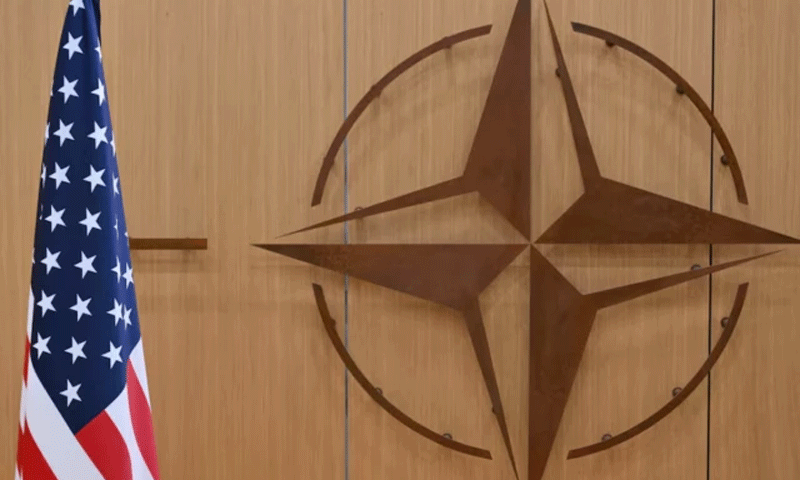

WASHINGTON: The United States is reportedly considering a significant shift in its nuclear strategy in Europe, with discussions underway about deploying nuclear-capable systems to additional NATO member states beyond the six countries that currently host them. The development, if approved, could reshape the alliance’s security posture and further heighten tensions with Russia.
According to a report by the Financial Times, US officials have signaled openness to expanding the deployment of nuclear-capable assets within Europe. The talks are said to be taking place within NATO channels, although officials caution that discussions remain at an early stage and no final agreement is expected in the immediate future.
The proposed expansion would reportedly involve the deployment of dual-capable aircraft (DCA), military aircraft capable of carrying both conventional and nuclear weapons. Such systems form a key part of NATO’s nuclear deterrence strategy and are intended to provide flexibility in responding to security threats.
Countries along NATO’s eastern flank, particularly Poland and several Baltic nations, have reportedly expressed interest in hosting these deployments. The interest comes amid continued concerns about regional security and the evolving military balance in Eastern Europe following years of heightened tensions between NATO and Russia.
Any move to station additional nuclear-capable assets closer to Russia’s borders would likely draw strong criticism from Moscow. Russia has long opposed NATO’s military expansion and has repeatedly warned against what it views as the alliance’s growing presence near its territory.
The reported discussions also coincide with renewed calls from US President Donald Trump and senior American officials for European allies to increase defense spending and assume a larger share of responsibility for their own security. Washington has consistently urged NATO members to strengthen their military capabilities while maintaining collective deterrence against potential adversaries.
Meanwhile, Pentagon policy chief Elbridge Colby has emphasized that the United States remains committed to extending its nuclear deterrence umbrella over NATO allies. His remarks suggest that while European countries may be expected to boost conventional military spending, the US intends to retain a central role in the alliance’s nuclear defense framework.
Neither the White House, the Pentagon, nor NATO has publicly commented on the report. Reuters said it was unable to independently verify the information.
Security analysts note that any expansion of NATO’s nuclear infrastructure would represent one of the most consequential adjustments to the alliance’s defense posture in recent years, carrying implications for European security, US-Russia relations, and broader global strategic stability.
About The Author