
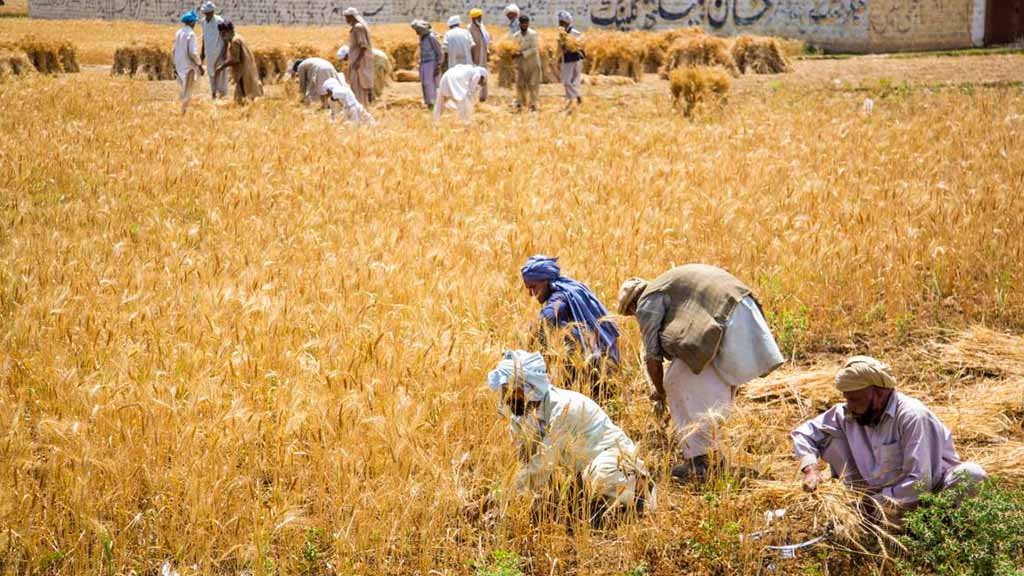

ISLAMABAD: Pakistan’s agriculture sector demonstrated resilience during fiscal year 2025-26, recording a growth rate of 2.9% despite a significant decline in cultivable land, according to findings from the National Economic Survey set to be officially released ahead of Budget 2026.
The survey revealed that cultivable land decreased by 3.6% during the year under review. However, improvements in productivity and output helped offset the impact of shrinking farmland, allowing the agriculture sector to maintain positive growth.
Major crop production showed a mixed picture. Wheat remained a key contributor to the sector’s performance, with the cultivated area expanding by 4.4% and production increasing by 4.3% to reach 29.6 million tonnes. Rice production also registered growth of 2.8%, while sugarcane output surged by 6.2%, reaching 89.4 million tonnes.
Not all major crops experienced growth. Maize production declined by 2.7% despite no change in cultivated area, highlighting productivity challenges. Cotton, a crucial cash crop for Pakistan’s economy and textile industry, also recorded a decline of 0.5% in production alongside a 1.5% reduction in sowing area.
The survey highlighted particularly strong performance among other crops. Gram production emerged as one of the biggest success stories of the year, posting a remarkable increase of 50.4%. Potato production rose by 27.6%, while mango output increased by 11.6%. Banana production climbed by 30.8%, reflecting robust gains in horticulture. Turmeric and chili production also grew by 25.1% and 9.2%, respectively.
Despite these improvements, some agricultural sub-sectors continued to struggle. Cotton ginning and miscellaneous agricultural activities recorded marginal growth of only 0.1%, indicating persistent structural and productivity-related challenges within parts of the sector.
The livestock sector also saw notable developments. According to the survey, Pakistan’s donkey population increased by 113,000 during the fiscal year, bringing the total number to 6.16 million. Livestock remains one of the largest contributors to the country’s agricultural economy and rural livelihoods.
The findings offer an early glimpse into Pakistan’s economic performance ahead of the formal presentation of the Economic Survey 2025-26 on June 4. While the agriculture sector managed to grow despite reduced farmland, the uneven performance among key crops underscores continuing challenges linked to climate variability, rising input costs, water availability, and productivity constraints.
About The Author