
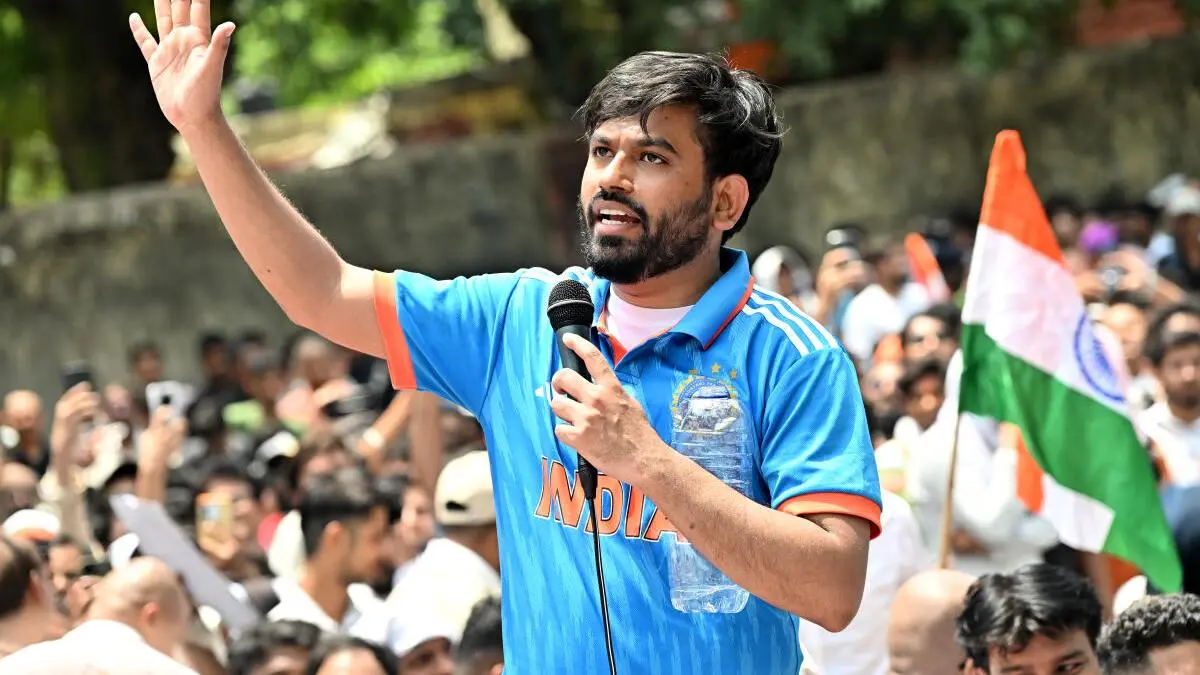

A satirical social media post evolved into a nationwide student movement, placing activist Abhijeet Dipke at the center of one of the biggest public challenges to Prime Minister Narendra Modi’s government in recent years.
NEW DELHI: What began as a sarcastic six-word post on social media has transformed into one of India’s most significant youth-led protest movements in recent years. At the center of the campaign is 30-year-old activist Abhijeet Dipke, whose online response to controversial remarks about unemployed youth has grown into a nationwide call for accountability.
The movement traces its roots to May 16, when Dipke posted, “What if all cockroaches come together?” on X. The remark was a reaction to comments attributed to Supreme Court Judge Surya Kant, who allegedly compared unemployed young people to “cockroaches.” Although the judge later said his remarks had been misunderstood, the post quickly went viral and inspired the creation of the satirical “Cockroach Janta Party” (CJP).
The online campaign rapidly gained momentum as millions of young Indians expressed frustration over unemployment, repeated examination paper leaks, and concerns about transparency in the education system.
Public anger intensified after the alleged leak of India’s medical entrance examination paper, affecting nearly two million candidates. The controversy, which also drew attention because of reported student suicides linked to exam-related stress, fueled large demonstrations demanding government accountability.
Thousands of protesters gathered in New Delhi and other major cities, calling for the resignation of Education Minister Dharmendra Pradhan. Following sustained public pressure, Pradhan stepped down, marking a significant political setback for Prime Minister Narendra Modi’s administration and a symbolic victory for student protesters.
Dipke, who had been pursuing a master’s degree in public relations in Boston, returned to India in early June to join demonstrations near Delhi’s Jantar Mantar. Since then, he has become the movement’s most recognizable public face, regularly addressing crowds while urging protesters to remain peaceful.
Born in Aurangabad, Maharashtra, into a Dalit family, Dipke has often said his family’s modest background shaped his political views. He previously worked with the social media team of the Aam Aadmi Party (AAP), where he developed a digital communication style centered on satire, memes, and humor. Although he is no longer affiliated with the party, several opposition groups have publicly supported the broader protest movement.
Supporters say the campaign represents a wider struggle for educational reforms, employment opportunities, and greater government accountability. Dipke has repeatedly stated that the movement aims to bring youth concerns back into India’s mainstream political debate rather than promote any single political party.
About The Author