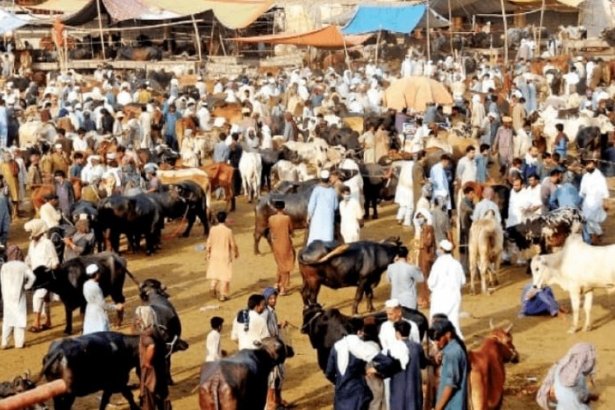

As Eidul Azha approaches, cattle markets across Pakistan are turning into crowded battlegrounds of bargaining, frustration, and soaring prices, with many families fearing they may not be able to afford sacrificial animals this year.
From Karachi to Lahore and Peshawar to Quetta, livestock traders and buyers are locked in intense negotiations as prices of goats, sheep, bulls, and camels continue to rise sharply. While citizens complain that animals are being sold at “unreasonably high” rates, traders argue that increasing operational costs have made lower prices nearly impossible.
Unlike many everyday commodities, Pakistan has no officially fixed pricing mechanism for sacrificial animals. Market experts say prices are influenced by several factors, including breed quality, weight, age, health condition, appearance, and public demand during the Eid season.
In major cattle markets, ordinary goats and sheep are currently being sold between Rs90,000 and Rs125,000. However, premium breeds with stronger physiques and heavier weight are fetching anywhere from Rs200,000 to Rs400,000.
The prices of larger animals have climbed even higher. Medium-sized bulls and calves are available between Rs300,000 and Rs700,000, while high-quality and heavier animals are reportedly being sold for Rs800,000 to Rs1.5 million. Camel prices have also surged dramatically, with some animals reaching between Rs500,000 and Rs2 million.
Livestock traders insist that buyers often fail to understand the massive investment required to raise healthy animals. Abdul Rehman, a trader who transported goats from Bahawalpur to urban cattle markets, said maintaining quality livestock involves significant expenses throughout the year.
According to him, factors such as body size, breed, health, grooming, and overall appearance directly affect an animal’s market value. He added that attractive and well-maintained animals naturally attract higher demand, pushing prices upward.
Another trader, Mian Shafiq, said the livestock business has become increasingly expensive due to rising costs of fodder, medicines, transportation, vaccinations, and animal care. He maintained that traders bear heavy expenses long before animals even arrive at cattle markets.
“Animals with higher customer demand are sold at premium prices, while less attractive animals are sold comparatively cheaper,” he explained.
Farm owners involved in breeding premium livestock also defended the current rates. Rana Mubashir Hassan, who operates a breeding farm, said quality animals require continuous investment in feed, healthcare, vaccinations, and maintenance throughout the year.
“These costs eventually become part of the final market price during Eid season,” he said.
However, many buyers believe the prices are now beyond the reach of middle-income households already struggling with inflation and rising living costs.
A buyer, Aftab Ahmed, described the rates as “extremely high,” saying many families are finding it difficult to purchase animals this year. He noted that sellers often demand prices far beyond buyers’ budgets, resulting in long and exhausting negotiations.
“When traders quote unusually high prices, buyers also respond with very low offers,” he said, adding that bargaining has become tougher compared to previous years.
Officials associated with cattle market management clarified that no government authority officially fixes animal prices. Sheikh Asad Zafar, spokesperson for the Punjab Cattle Market Management and Development Company, said traders independently determine prices based on breed, weight, health, and appearance.
He added that authorities only intervene in cases involving fraud, illegal practices, or complaints from buyers and sellers.
Officials have urged citizens to purchase sacrificial animals only from officially registered cattle markets and designated sale points, warning people against roadside sellers and unregulated locations.
Meanwhile, cattle markets across several cities are witnessing increasing competition among traders as the supply of animals continues to grow ahead of Eidul Azha. Despite the higher availability of livestock, traders say overall buyer turnout remains lower than expected due to financial pressure on consumers.
About The Author